This is a long narrative as I try to explore why it is that I want to explore some of the ideas that have driven me to work on this film.
I thought that technology would bring a better future, but by the time some of these things were realised but it isn’t so clear cut. The future turned out to be messier than the narrative that young me dreamt, and was sold.
During my formative years, I had trouble sleeping, when I woke early in the morning I would creep downstairs, pour myself a bowl of breakfast cereal, and watch Open University broadcasts on our Television (I could barely understand any of it but it was often the only thing on at the times I woke).
Our TV was faux wood panelled, and needed the channel changed by pressing buttons on the set, it took 2 people to lift it; it wasn’t technology, it was furniture.
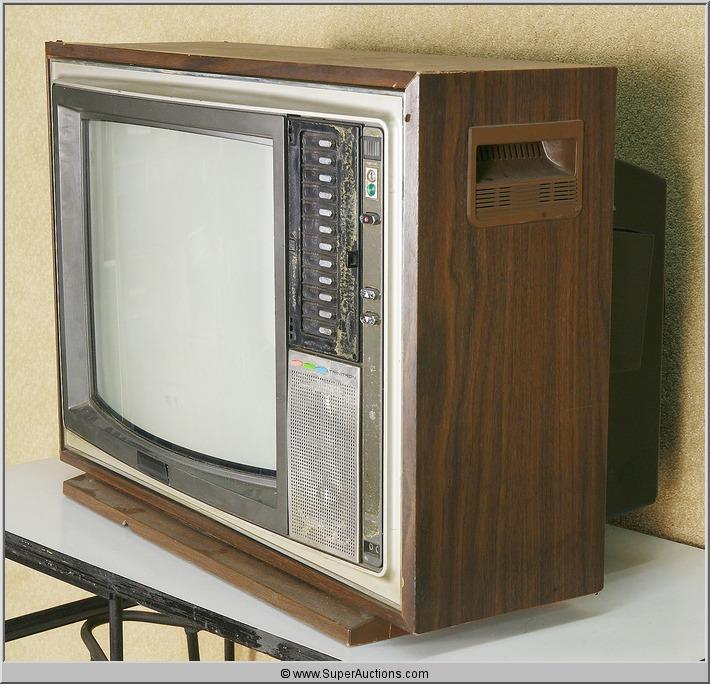
In those Open University broadcasts there was technology, depending on the morning there was physics or biology with machines that looked like they came from the future. In the evening there was Tomorrow’s World.
High Tech was the style, new things were made of plastic (preferably black), and chrome. Friends and family had weird pieces of 60s and 70s furniture around, with curiously futuristic aesthetics, we had the wood panel TV, but that was OK we would catch up with the future.

Cheaper, cleaner, faster, more available, more ubiquitous, more democratic, more accessible, fairer.That was the future that I dreamt of. As the wrecking balls tore oppressive landmarks, and dark underpasses were filled in my home of Birmingham new glass fronted building and cobbled pedestrian zones replaced them I thought it was arriving.


The internet also represented a connection to a wider world, information, possibility, opportunity, so much possibility I had no idea what to do with it. Once we had it at home I remember dialling up and logging on just because I could, I don’t have anything to do, I didn’t know what I could do, I just liked being online.
This now seems to fit with a narrative of Technological Utopianism.
The dirt, noise, and chaos that invariably accompanied industrialization in the real world were to give way in the future to perfect cleanliness, efficiency, quiet and harmony…Connecting all sectors of the technological utopia would be superbly efficient transportation and communication systems, powered almost exclusively by electricity. These systems would enable widely dispersed citizens to live and work wherever they might choose. As one of them puts it, ‘we have practically eliminated distances.’
http://web.mit.edu/m-i-t/science_fiction/jenkins/jenkins_1.html
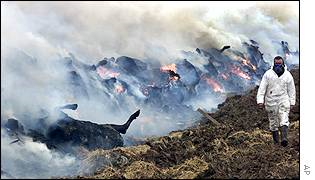
Of course I was naive, most children are (and should be), I am writing this down because I want to understand the place that this film is coming from. As I became more aware of the world outside the small bubble of the British Midlands this complicated that future, not just a string of high profile; shuttle disasters, gulf wars, the BSE/CJD crisis, September 11th, financial crash, 2016. But also a growing awareness of inequality and consciousness that there were a plurality of ways of interpreting things rather than just a dominant voice, (thanks history of art lessons).
Films like Blade Runner (Scott, 1982) bought to my attention the concept of dystopia. I wanted to understand how a world full of vibrant neon signs and flying cars could be anything but wonderful.

This led me to discover Constantinos Apostolou Doxiadis and his work on Ekistics. I was drawn in by his book Between Dystopia and Utopia, this was one of my first introductions to modernism and the idea that design can bring about positive change. I failed to see the potential failures or abuses of these ideas, where does control lead.
The freedoms that the internet seemed to offer have been co-opted to create a system of commerce and coercion.
This architecture produces a distributed and largely uncontested new expression of power that I christen: ‘Big Other.’ It is constituted by unexpected and often illegible mechanisms of extraction, commodification, and control that effectively exile persons from their own behavior while producing new markets of behavioral prediction and modification. Surveillance capitalism challenges democratic norms and departs in key ways from the centuries long evolution of market capitalism.
Zuboff, Shoshana, Big Other: Surveillance Capitalism and the Prospects of an Information Civilization (April 4, 2015). Journal of Information Technology (2015) 30, 75–89. doi:10.1057/jit.2015.5. Available at SSRN: https://ssrn.com/abstract=2594754
Space exploration represents for me the technological optimism of the 20th century, we will find the answers so long as we ask the right questions. I want to believe this, but I’m not sure I still do. Young me was sure that we would be regularly visiting the moon, but as of May 2019, we still haven’t been back since Apollo 17 in 1972, and the US hasn’t ferried their own astronauts to space since 2011.

This I find a deeply contradictory position, I am still seduced by technology and the positive potential of it, I feel that in science and technology is a potential salvation, but I am aware of the current inadequacy of of social, political, and personal relationships with it. As Foucault discusses there doesn’t seem to to be one coherent version of self with a completely consistent personal philosophy. The versions that we present to other people are highly contradictory, I believe that it our right to be contradictory, but that we should acknowledge and explore those inconsistencies. As an artist I think it is important to explore with our personal contradictions, to reason with them.
I’m Vegan but believe in being polite and eating food that is cook for you with love and generosity.
I believe in freedom of speech, love, and expression, but sometimes wish that people wouldn’t shout about it when I’m around. Who doesn’t want a quiet life.
Does the rise of surveillance put at risk our right to be inconsistent?

