
Ken’s post about Pantenburg pushed me to question why I still wanted to wanted to work on a traditional 2D screen, why is the silver screen in the dark still so alluring to me
Post-Cinema? The Dissolution of Limits in Film
— Read on www.volkerpantenburg.de/index.php
(Dr. Volker Pantenburg und Simon Rothöhler, M.A.)
Film-theoretical analyses of »post-cinematographic« constellations usually tend to render their rhetoric of rupture plausible through references to film’s double detachment:
(1) from its historically-developed performance apparatus (cinema space, projection, establishment of a specific form of publicity with a defined set of social practices and rituals);
(2) from its photographic supporting material (celluloid, indexical image registration). According to this argument, the contemporary »cinema without walls« is not least the product of a movement of boundary dissolution which has undermined the privileged significance of the institution of the »cinema« in favor of the audiovisual complex known as »film.«
This development corresponds to a process of differentiation of the forms of experience of the filmic, one that has been reorganized, on the one hand, in multimedia screening windows (video iPod, computer, cellphone, home cinema), and on the other, has been increasingly and paratextually connected with a diversity of non-filmic media commodities. Both processes have replaced film as a »self-contained commodity« (its commodity form at the end of the period of early cinema), and successively transformed it into an fundamentally less stable »intertextual commodity.«
In light of these multiple screens and in light of economically and socially reconfigured modes of reception, but also in light of the numerous projected images found today in museums and galleries, the question poses itself of the status of the displacements and multiplications of cinematographic apparatuses and the qualitative novelty of the aesthetic practices associated with them. At the same time, this analysis must integrate »post-cinematographic« relativizations, and the continuities involved must be emphasized. This entails, for example, the generally questionable nature of an ontological break between photographic and digital forms of film. This project will explore the poles and dimensions of the diversification of the cinematic apparatus and will, with reference to both filmic art installations and contemporary commercial blockbusters, investigate the ways in which concrete filmic practices render these transformational aspects aesthetically productive.
»Post-Cinema? Entgrenzungen des Films« is part of the sub-project B3 of the Collaborative Research Center 626 »Aesthetic Experience and the Dissolution of Artistic Limits« at the Freie Universität Berlin headed by Prof. Dr. Gertrud Koch.
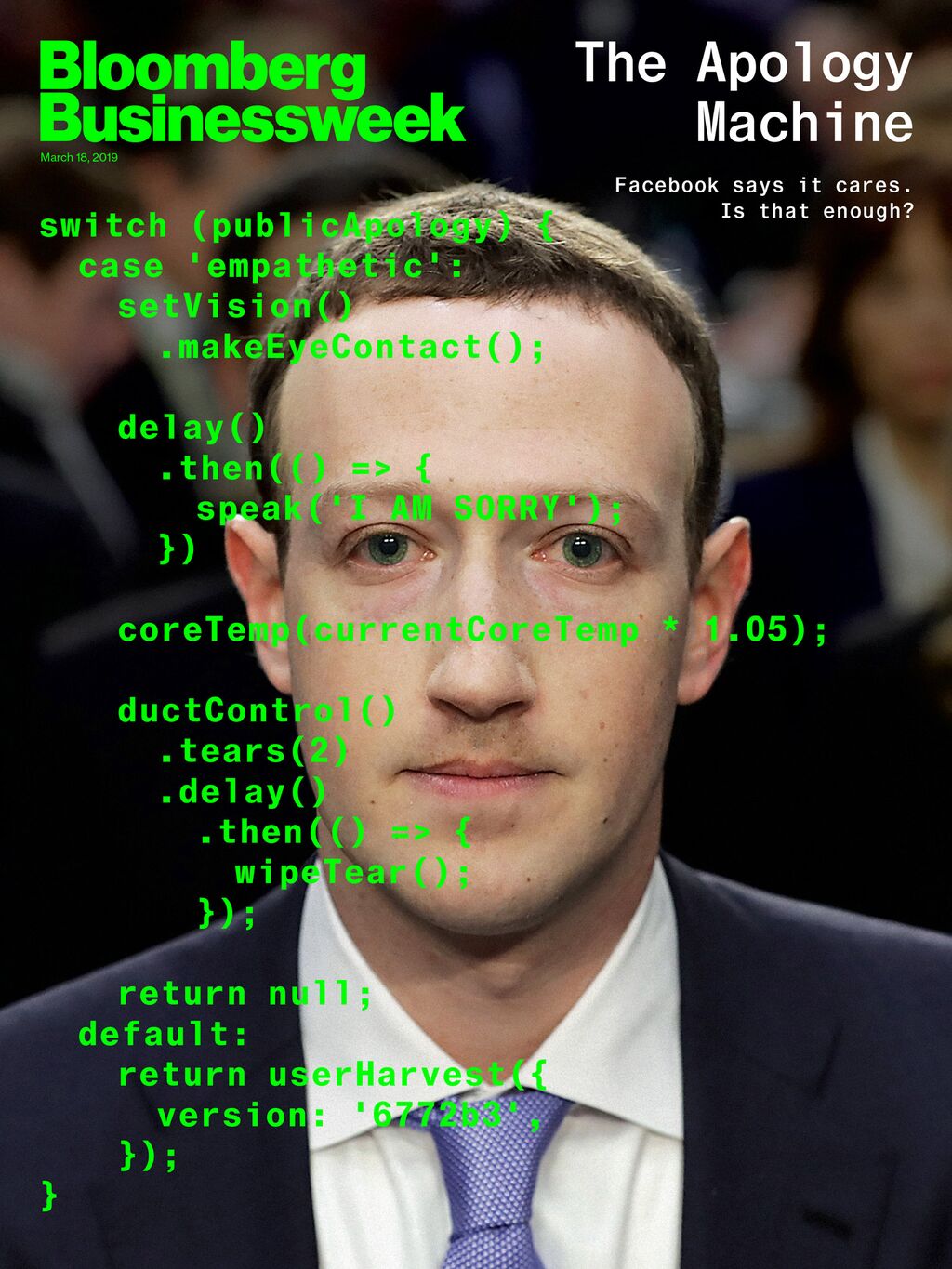
If Facebook wants to stop those things, it will have to get a better handle on its 2.7 billion users, whose content powers its wildly profitable advertising engine.
https://www.bloomberg.com/features/2019-facebook-neverending-crisis/
There is something about the ritual, as Pantenburg puts it, that gives a form and structure to a cinematic experience that I find to be a useful framing device for developing ideas. An audience comes to a cinematic experience with certain codes and conventions, following or challenging these in service of an idea then becomes and artist choice that is part of the spectrum of cinematic language.
I nearly posted a link to this article a few months ago, I was interested in the way that the ubiquity of video capture and distribution technology makes this kind moment part of a historical archive, John Akomfrah’s point about historical documents that capture and preserve a moment. I missed posting it in a timely manner at that time and I felt that the moment t had gone. Now considering why I want to create a conventional cinematic film I realised that it was relevant again, like other social/viral videos as quickly as it became a conversation point so it was replaced by something new, although the moment was archived the context of its reception changes our consumption of it, it becomes consumable, a quick snack.
 mattprentice