Final Project
Final Project reflection
I started this project with the vague idea that I wanted to make something about voyager. Those two objects created by humanity, artificial, isolated are pushing the frontiers of our experience, reaching our civilisations senses ever outwards. I was interested in this experience from the perspective of those machines.
I was interested in the identity of Voyagers 1 and 2, they started as twins but their journeys, route, triumphs and malfunctions have left them unique. I wondered how they would experience the last flickering of the end of the universe.
From this starting point the idea became progressively more abstract and broad in scope. Experimenting with the image making processes I felt that I wasn’t representing the Voyagers’ view of the end of the universe but instead developing a visual language for how I was trying to understand the vast scales of time and space.
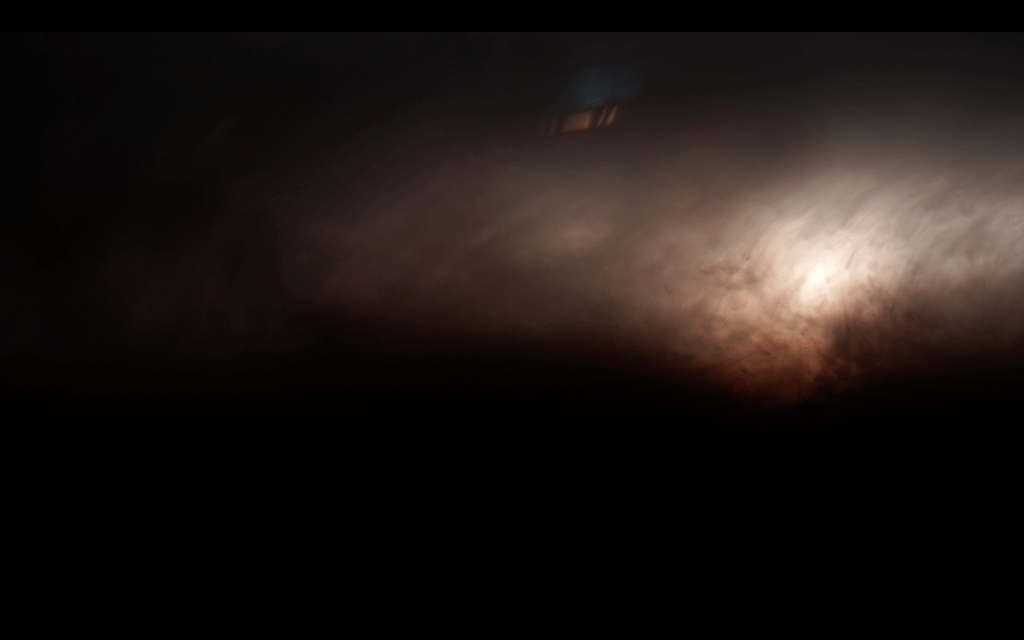
When I screened work in progress versions of the film I was interested in comments that discussed the difficulty of judging scales in the images, and that this added to the immersive quality of the images. It was also apparent that when projected at larger sizes the smallest amount of camera shake, deliberate movement, or sense of the images being made broke the immersion. In subsequent filming I focused on minimising this by adjusting the mixtures and processes. I was also able to shoot in high speed so that movements could be slowed down further still.
This has been one of the most enjoyable film projects that I have worked on working with a small crew who wanted to experiment with the processes of making the images for the film and this produced a very collaborative and creative atmosphere I the studio. I think this present in the visuals of the film, in the variety and range of images.
I feel that overall the soundscape was also successful, I think that some of the sounds could have been stronger but the concept and treatment of the soundscape works for the film. A number of times I felt that I had gone down the wrong path with the soundscape, but working on the project over this length of time gave me the space to backtrack and try something new. I feel that the layers of slowly developing natural sounds closely reflects the analogue processes that were used to produce the visuals.
The voiceover component of the soundtrack is the weakest element of the completed film. I believe that conceptually the voiceover now works with the limited palette of words, and the selection of words also feels correct. It took much longer to arrive in this place that it should, I was afraid that I was going to break the film. I feel that this leaves the execution of the voiceover weaker than the rest of the film, it hasn’t been through the same process of experimentation, refection and development.
I feel that I was a bit seduced by the process of making the images, in the controlled environment of the dark studio it was easy to get lost in trying just one more experiment, and arranging another day of filming. Whilst this was an important part of the process of finding this film it was also a procrastination tactic to avoid dealing with the soundscape, I was producing work therefore the project was getting done. This was also reinforced by the seductive power of positive feedback, I as pleased with the images that I was making, and comments such as ‘I have no idea how you made that’ encouraged me to continue to explore these processes. In some way lockdown stopping filming was an important step in making me move on.
The soundscape development, especially the voiceover, would have benefitted from the same kind of collaborative relationship that I had with the image-making. I need to consider the possibilities of the contribution that others could bring to the conceptual development of the sound. I needed a collaborator for the images, I couldn’t have done it on my own (not without ruining camera equipment with ink and glycerol), but I could do the sound on my own, so I didn’t look for collaborators.

Whilst there are elements to this project that I feel are not prefect I do feel that it is resolved and I am looking forward to getting it in front of audiences, the film reflects the ideas that motivated it and the journey of making.
Collaboration seems like an obvious lesson from any piece of moving image work, but it is one that I seem to need to be reminded of, the openness and humility to consider possibilities that others bring. Since the Zero project in 2018 I have been working on a longer cut of that film and have been planning further filming to develop it further, as a very personal story I had not consider the possibility of working with anyone but I should be open to that possibility.
Near
Having started this project last year it feels like it is coming together, nothing like a deadline to clarify thoughts.
Further Development of Suspace
Having spent some time layering the visual elements of the film I returned to the soundscape. I have been working on (and thinking about) it without making much meaningful progress, I still feel that there is a missing element the aspects that I have tried so far have seemed to get further from what I have been trying to achieve.
I tried a stream of consciousness approach that I recorded whilst stuck in traffic commuting home (before lockdown. That wasn’t successful, I even ran it through transcription software but it didn’t produce anything useful.
I tried a few more versions of the synthesised voice approach as I noted previously the difficultly was finding words to put into have read by the voice.
Reading it out myself did not help at all. Those recording as never getting airtime.
I wasn’t at all confident about this area of exploration so I went back to working on an abstract soundscape. I was looking for an approach that addressed the bleak oppressiveness of the drone.
Listening to Hannah Peel’s Mary Casio: Journey to Cassiopeia puts me into the emotional and intellectual space that has inspired my work. But music is a expressive art-form in its own right, if the soundscape is too musical it feels like a crutch, will it put audience members into an active engaged position?
I am also still interested in the process of sonification and have worked on a few pieces with the the process that I used for Kino.
One of the pieces that I feel has moved further towards something that is useful was a an outcome of time processing a drum loop driven by a function.
I have continued to layer the new sounds with the older drones and worked to incorporate more natural sounds (rain, birds wings, breathing, snoring children). I have continued to use the process inspired by Jon Hopkins of mixing down and destructively working over the top of past versions. This gives me the sense of moving forwards (even if the end result is very similar).
The next step needs to be to return to voices.
Sunday in Peking

Marker explores the Peking of 1955 with the voyeuristic camera of a tourist, everyday life, history, people, art, parades, everything is judged equal to the collecting eye of the camera, it is a object to be captured. I think that I am very aware of this position in this film as I have walked that same path, seen those same sites (sights) as a tourist in Beijing. I have been the stereotype backpacking Brit seeking colour and exotic experiences.


Marker’s film is an interesting visual document of those moments, the camera lingers long enough for the viewer to experience the scene that is being captured, allowing it to live on, preserving it. From this perspective the equalising gaze of the ‘kino-eye’ judges all things that are infornt of it worthy of capture an preservation, something of the Peking of 1955 lives in Marker’s film.
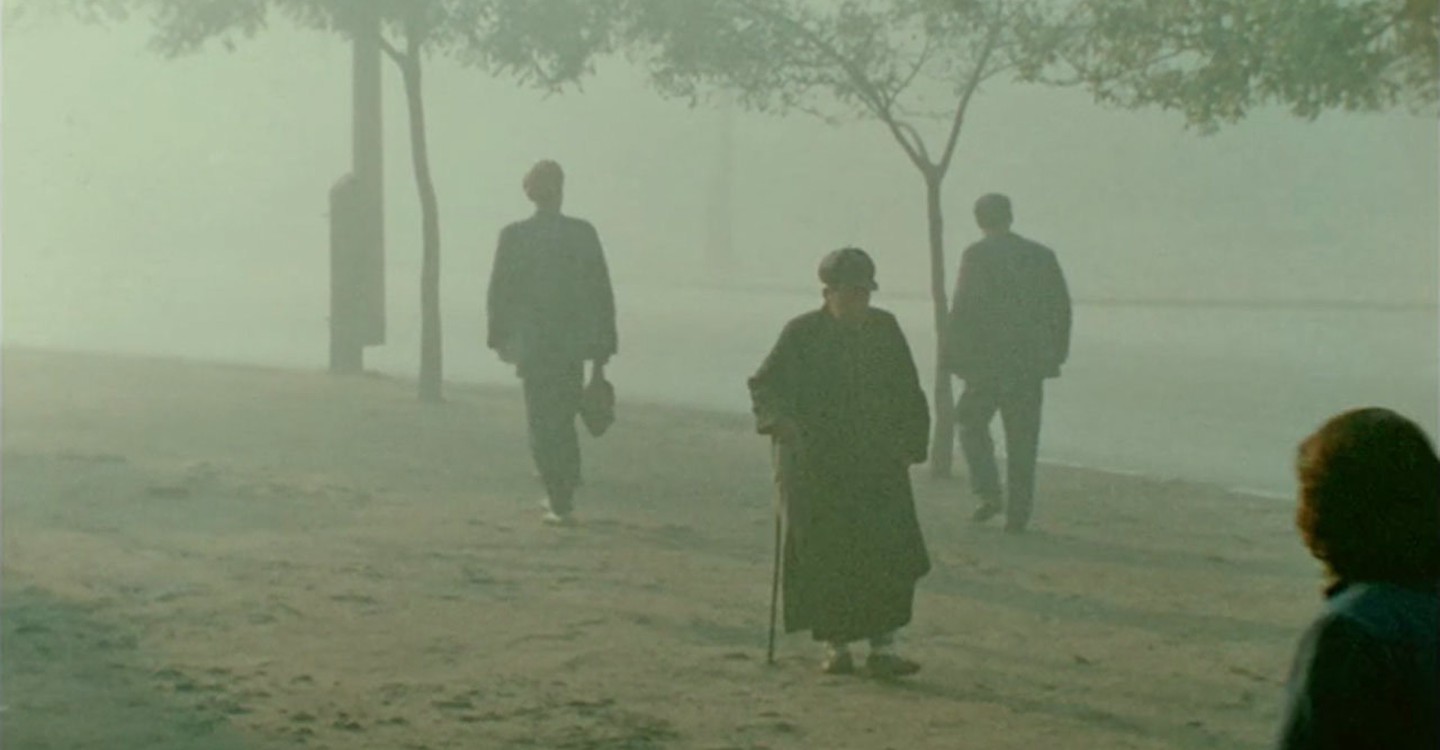
Marker’s voiceover acknowledges the subjectivity that the camera diminishes. As he describes the events that are onscreen he comments and interprets the images from his own perspective. The dusty morning he likens to politeness. This subjectivity is firmly established in the opening sequence when images associated with china are juxtaposed with the Eiffel Tower.
For 30 years in Paris I had been dreaming about Peking without knowing it
Marker
Marker establishes this as is exploration of his journey through this place, his experience of it. This is reinforced in a sequence in a school where he shows children looking at a book that he had with him, he describes their excitement at seeing the “exotic” letters on the page. In this moment he makes the audience conscious of the value judgements that he is bringing to the images with his narration. To the children Marker is as much a curious object as Peking is to him.

The price of modernism doesn’t seem so high when you consider the price of the picturesque.
Chris Marker (1956)
Marker’s phrasing, when discussing the painful walk of a woman with bound feet, clarifies some of the issues that I have wanted to explore with my films over the past two years. The tension between progress and tradition. Marker puts a price and value on both, an uneasy relationship, impossible to completely reconcile. This same complexity seems to be present in a globalising world as cultures are pressed together.
Tutorial reflection 18.4.20
It has been a few months since I seriously explored this project having had other commitments (and a case of creative procrastination). As Ken commented during the tutorial “it seems like a different decade”. It hasn’t changed the relevance of the project, and I don’t want to pivot the project to make it about the current situation in any way. [For historical purposes the world is currently in the middle of a social distancing experiment to tackle the threat of COVID-19].

Since my last post about this project I have been working on another new edit that started around 2 weeks ago, having left the December 2019 edit for so long when I picked it up I couldn’t return my thinking to the same place and couldn’t understand the decisions that I had made.
I had been dogmatically resisting digitally manipulating the footage that I had captured but with a new perspective this didn’t seem to make sense anymore. The images are just pieces to be combined and manipulated to achieve the intention of the piece, they are not the piece on their own.
I am still focused on this being a cinematic experience, sound is part of that experience. During today’s tutorial we largely focused on the soundscape, we discussed my challenges with the darkness of the sounds, I feel that each attempt so far has resulted in a soundscape that is threatening, ominous, and destructive. This is not where I want to end up.
Ken suggested looking at voice again as a solution to this and exploring the possibility of a child’s or female voice. Voice is something that I have rejected and gone back to a few times because I have been having difficulty finding the right words. However, we discussed the way that it might help to anchor the experience for the audience and possibly act as a guide.
This does not have to mean a voiceover or narrative but could be as abstract as the visuals. Ken suggested looking at the Cut-up method I had come across this before but it had not occurred to me to use it here. Ken suggested going back to the original concept/inspiration for the work. This is Voyager for me so my next step is to research and select some texts that could act as the source for the cut-up.
Something else that I am going to explore that is a departure from the process that I have been exploring so far is to treat the sound as a separate sonic experience of the same ideas and concepts as the visual work. This will hopefully allow for some additional random, unexpected interaction when the pieces are united.
The visual elements of the piece have been a carful balance of deliberation and chance, I think that there is the need to bring this to the sound.
Next steps for sounds
- Not descriptive
- Whispering in their ear – immersion behind the audience
- Quality of the voice
- Breathing reacts to the spoke words
- Different breaths in the sections
- Delicate
- Go back to the original idea about voyager
Totally addicted to watching paint drip
Although I have been a bit slack on the blogging front I have spent a fair number of hours in the studio and edit suite over the past few weeks.
After a total hiatus to the project through September I went back to working on the soundtrack in late October and screened a new version of the film in early November. This version was again missing the voiceover, it feels out of place every time I add it back in, I think I might stop trying.
The most positive feedback that I got was that at a number of points viewers felt they were lost in the images and could not gauge the scale, were they looking at stars or cells, and that this was immersive. It was noted that both camera shake and movement detracted from this as I gave subtle depth queues, breaking the illusion. This gave me the direction that I needed for the next phase of development. I have been working with the same cinematographer, Callum, on a new series of shoots to try and eliminate shake and movement.
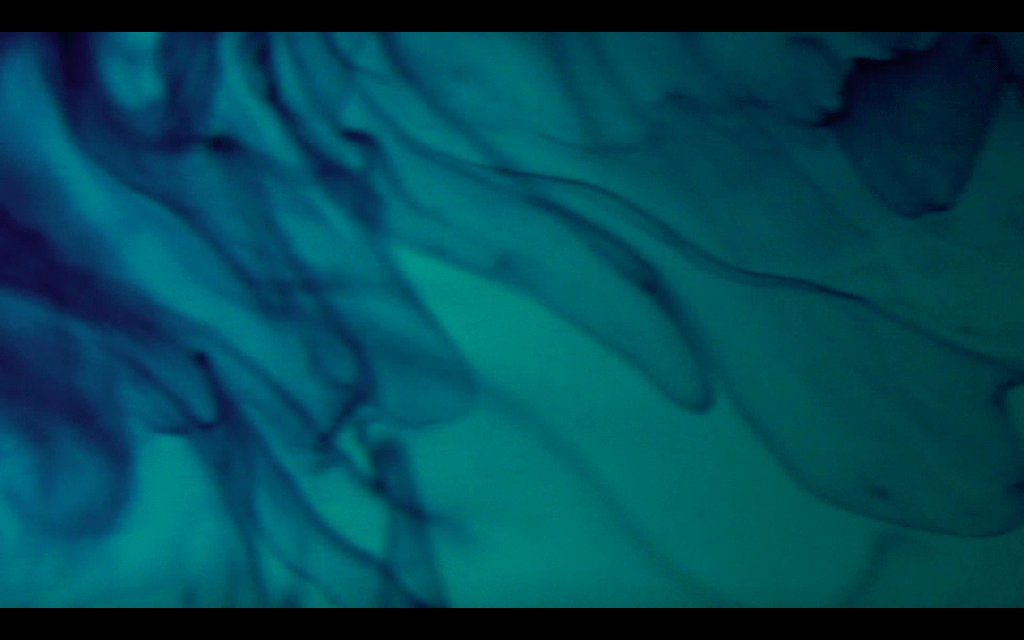
Something that has proved to be very interesting in these experiments is that Callum has got access to a Sony A series camera that is able to shoot 120fps at 1080p. This has produced some spectacular images that I was surprised that we were able to achieve. The lighting setup has been the same, 1 hard source as far from the tank as possible, but we have experimented with some coloured gels, and white as well as black backgrounds.
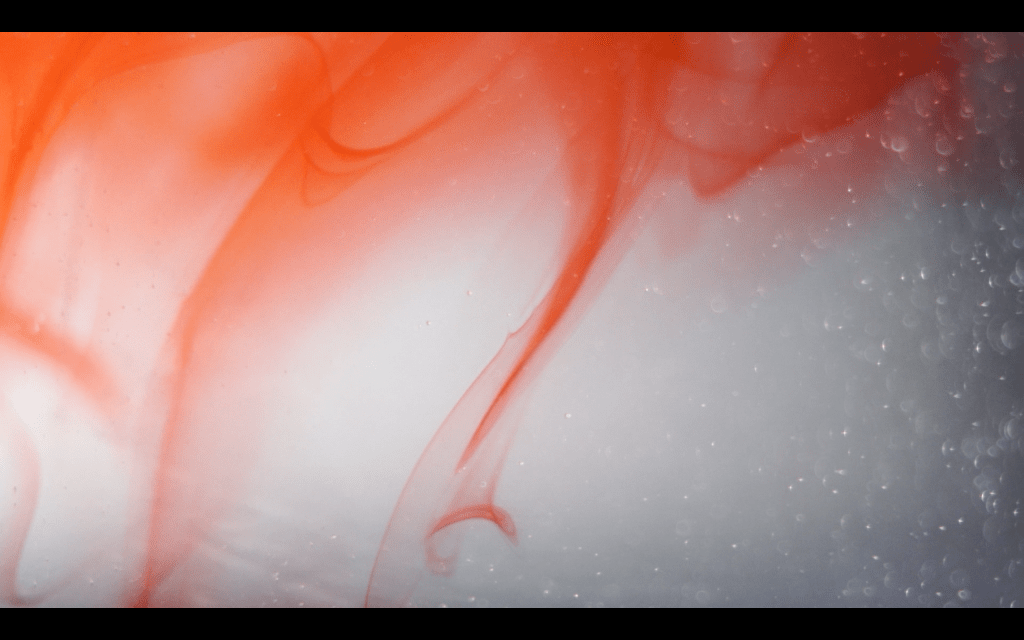
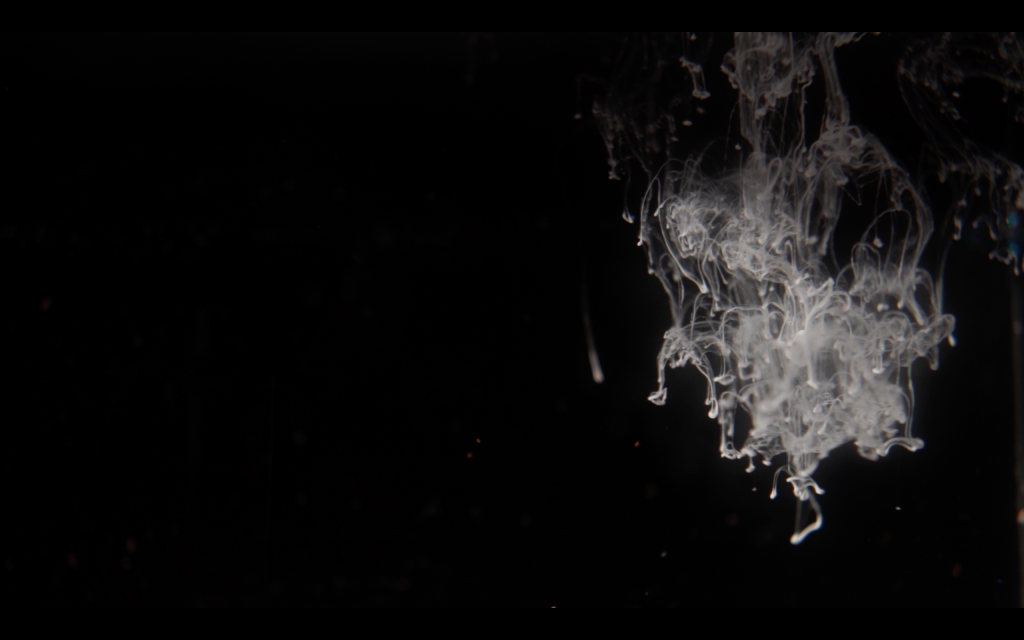
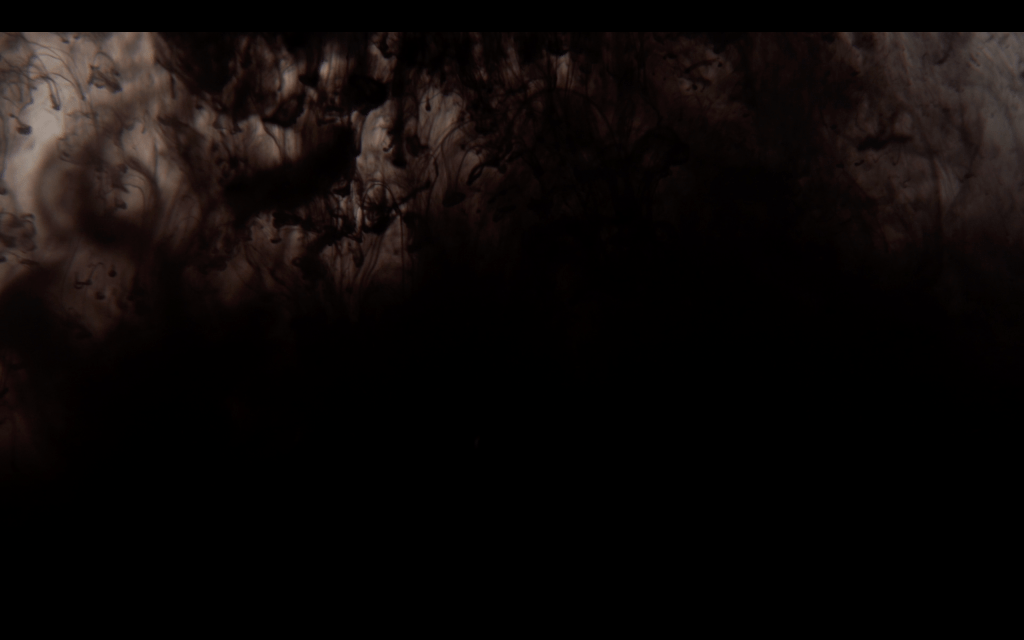
We have also had success using a larger 300ml syringe and lengths of clear tubing to more consistently add the coloured or cloudy elements to the tank. Notable successes were; adding thinned white acrylic paint to the bottom of a tank of pale red glycerol, red ink suspended in glycerol under blue light with a white background, and slowly dripping a black ink/acrylic mix into water.
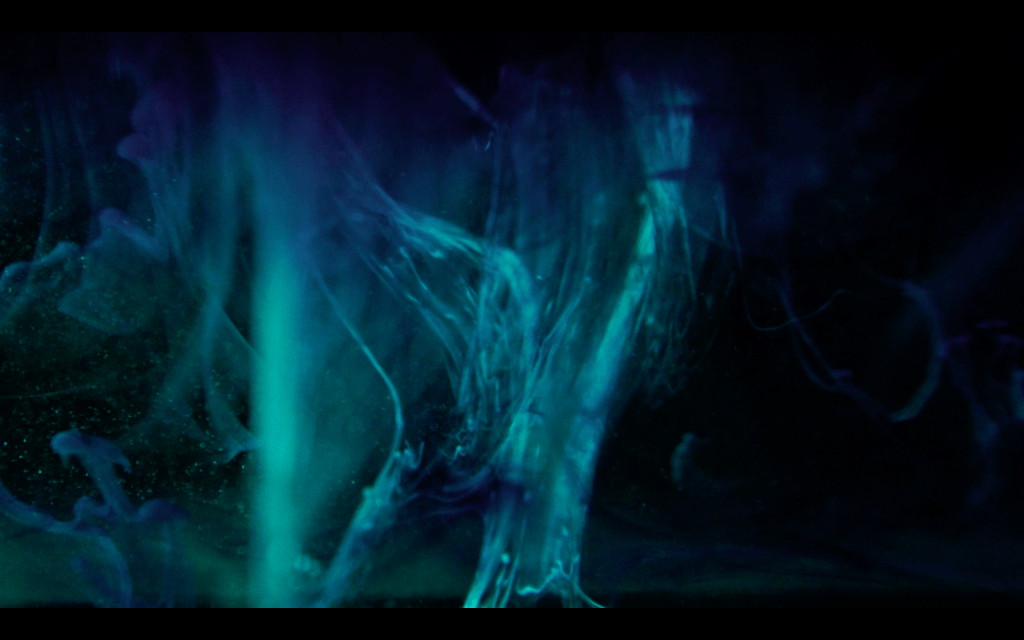
With the high frames rates that we have filmed at there were another 2 hours of rushes to sort, initially I was much more decisive discarding footage with camera shake, and even good sequences that had a focus pull (initially the focus pulls looked interesting as different strands and filaments come into focus, but the focus change often gives away scale).
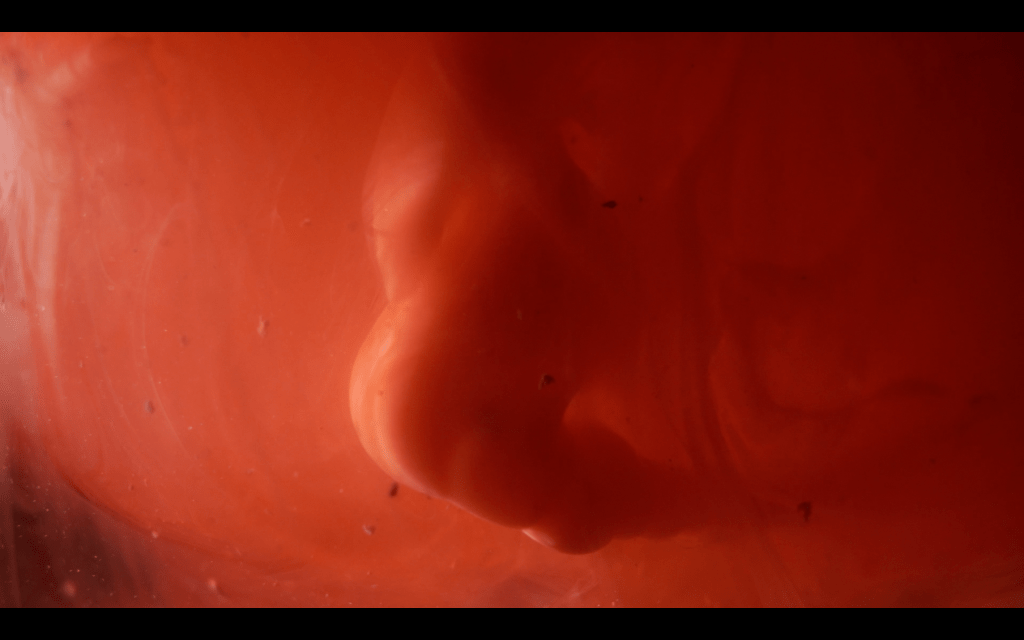
With the footage sorted I decided to go back to an empty timeline and rebuild from memory and a fresh take on the footage the sequences.
Words to say – update
I originally started this post on August 18th but didn’t mange to finish it. I wanted to update my blog again today but without this post it seemed that there was a piece of the journey missing, the following post is as I left it in August.
With the picture edit fairly settled I have done a bit on the sound design continuing on from the starting point that I had (I will write about this in another post), but have mostly been deliberating on the script for the voiceover. In my last post about the VO I was scratching around but really felt like I hadn’t got close to any clarity about what I wanted to say yet, or how.
I have been reading a series essays and book extracts that have been looking at social theory in relation to changes and trends in contemporary society. This is a theme that I have returned to in a number of blog posts this year, even if I haven’t really got near addressing it in my work. In particular, Is Is still ok to dream of utopia?, I referenced the ideas of technological pessimism. I wanted further arguments on these questions, I needed to read others grappling with it.
I in no way feel that I have a full and complete reading or critique or the writers that I have engaged with but I feel that I am beginning to arrive at a place where I have the confidence to say what I want to for this film, now, I reserve the right to be wrong but this time I don’t feel like I have to put that clause in the work. I intend that through the abstraction in the visuals and soundscape I will have established the space for interpretation in the work allowing me to make a series of statements in the voiceover as starting point for that analysis.
Script
Crimes are committed in the name of progress
But progress is not a crime
Crimes are committed in the name of modernism
But modernism is not a crime
Crimes are committed in the name of making a better world
But wanting, and striving for a better world is not a crime
Peace, not a crime
Love, not a crime
Understanding, not a crime.
A radio telescope
I feel that I have had long enough trying to get some perspective on my film. I ran into a theoretical wall that I need a few journals to help me get a few thought holds to help me scale but I will tackle that in another post.
Today we took a family visit to Jodrell Bank and the Lovell Telescope, I have previously mentioned that my love of space science and exploration is to some degree shared by my family. So we went and ticked something else of my bucket list, I have wanted to go to Jodrell Bank and see the telescope ever since I was a child. It wasn’t just the science but also the pop culture references, mainly Dr Who when I was younger and later Joy Division, that drew my attention.
I knew that I was going to write something about the visit because the subject is closely aligned with that of the starting point for my film. The imagery displayed around the site, is the imagery that inspired my experiments with fluids and fish tanks.

After the initial marvelling at the size of it, and the joy at being there (I really like space), I was struck by how much it looked like an eye. I felt like I was treading ground that I had covered before, this is a mechanical eye, it can see what and where we can’t, not only individually but globally we are augmenting ourselves with senses that reach beyond our biological limitations.
‘Chernobyl’: Icelandic Artist Drew Sounds From Power Plant to Compose HBO Soundtrack | Billboard
Icelandic composer Hildur Guðnadóttir begun “treasure hunting” with her ears at a decommissioned nuclear power plant in Lithuania to create the ominous soundtrack for the HBO mini-series Chernobyl, which has earned 19 Emmy nominations.
— Read on www.billboard.com/articles/news/international/8527454/hildur-guonadottir-icelandic-artist-chernobyl-soundtrack-interview
I was really drawn to the process of using sales from the environment to build a soundtrack that was musical. Although the Chernobyl soundtrack is generally ominous there are sections that are more hopeful. The ominous tone of my film’s soundscape is the aspect that is not working for me that the moment, I am searching for inspiration to solve this.
Written words are so transparent
I have spent this morning taking another pass at trying to write a script for the voiceover. I managed to come up with something, I recorded a version with my own voice but that isn’t going to work at all, it is not going into the film.
- possibly I’ll never show it to anybody,
- What is on screen is a thought taken shape,
- Internal made external made internal again,
- very broken loose,
- a circle.
- Working in the dark,
- how big is the jigsaw?
- some pieces fit,
- Is that an edge?
- No,
- just a bigger piece at a new scale,
- but still the pieces keep going together.
- We look out of our window and think,
- Its dark out there and we try to do the best in the rain,
- In a vast cosmos I don’t understand it is easy to feel small,
- insignificant,
- A pale blue dot,
- A smudge no bigger than a pixel,
- But someone made the camera that took that image,
- Made the Voyager that reach out into that vastness,
- a messenger,
- Possibly not so insignificant after all,
- Or just the fleeting moment of joy,
- Of finding a parking space.
In trying to write the voiceover it is clear how much more exposed, less confident, I feel with written word. They feel transparent, ideas bare.
I recorded another version, synthesised using text to speech, I really heard the flatness that had been commented during the last session of the year.
Stop and Reflect – Final Project
I had been focused on getting principal photography organised and executed for the last few weeks, falling into the the same hole that I identified in my Back to basics post – Back to basics – Final Project.
Before sitting down to begin a period of post-production I wanted to remind myself of why I was making this film, what were the choices that I had made along the way. Reading back through the blog posts that I had written the clearest thing to me was that there was no truly defined coherence to the work so far, just a series of loosely defined but related questions and thoughts, and 460 GB of footage of liquid moving in a fish tank.
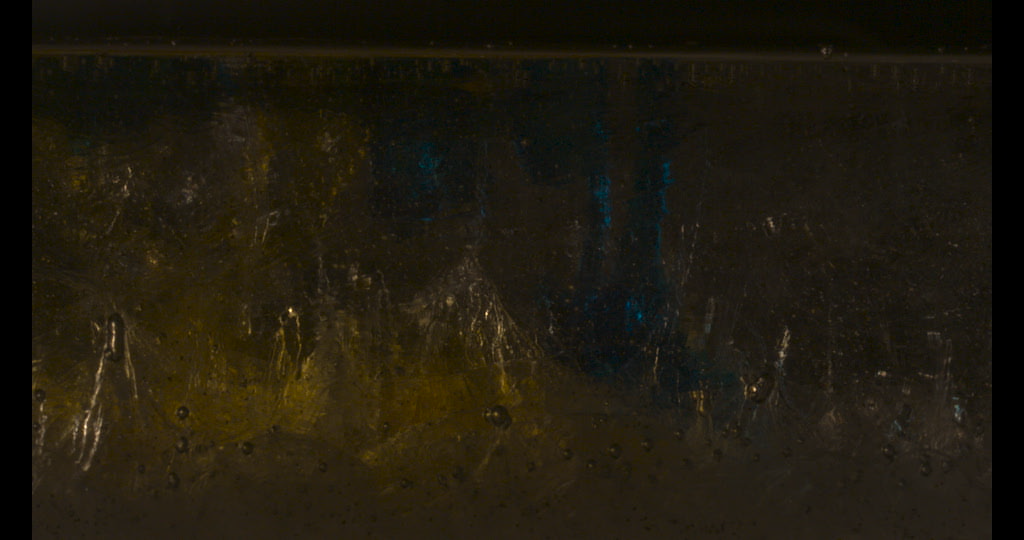
Stuck
I began to realise that with this project the footage wasn’t going to suggest the next move which is my typical approach to beginning an edit. I turned back to the voiceover script as a possible a route forwards, but I was more bogged down here, voiceovers aren’t really my thing I’m not sure why that sounded like a good idea when I proposed it.
A phrase that resonated with me when I read the blog back was…
Artificial Intelligence Artist in my RSS feed
There was something about the jumbled assemblage of the words that suggested a way forwards. I have looked in previous projects at using algorithmic or process based approaches to creating work. I wondered if the script might be hidden in the posts that I have already written. I was planning on finding a mechanical eye to help me find it before returning to the editing process. I didn’t.
Thanks Brian
I sat down with the intention of coming up with a process to create the script a few times but didn’t, I always ended up doing somethings else. I sat one evening searching for a way forward and remembered a technique (trick, tool) that I have used a few times before, and encourage my students to use, Oblique Strategies. There are lots of great web resources that explain what Oblique Strategies are, and this video of Brian Eno talking about them.
I use a iPhone app now but have used dice and a list in the past, I find it works best if you try to force yourself to make use of whatever card comes up, even if it doesn’t seem that obvious, for me, that not obvious bit is why it works. The way I approach using the cards is as if I had a minute with Brian Eno and could ask him for his advice, the resulting card is the feedback from Brian, like any good feedback there is often some degree of interpretation that we still need to do.
Listen to the small voice
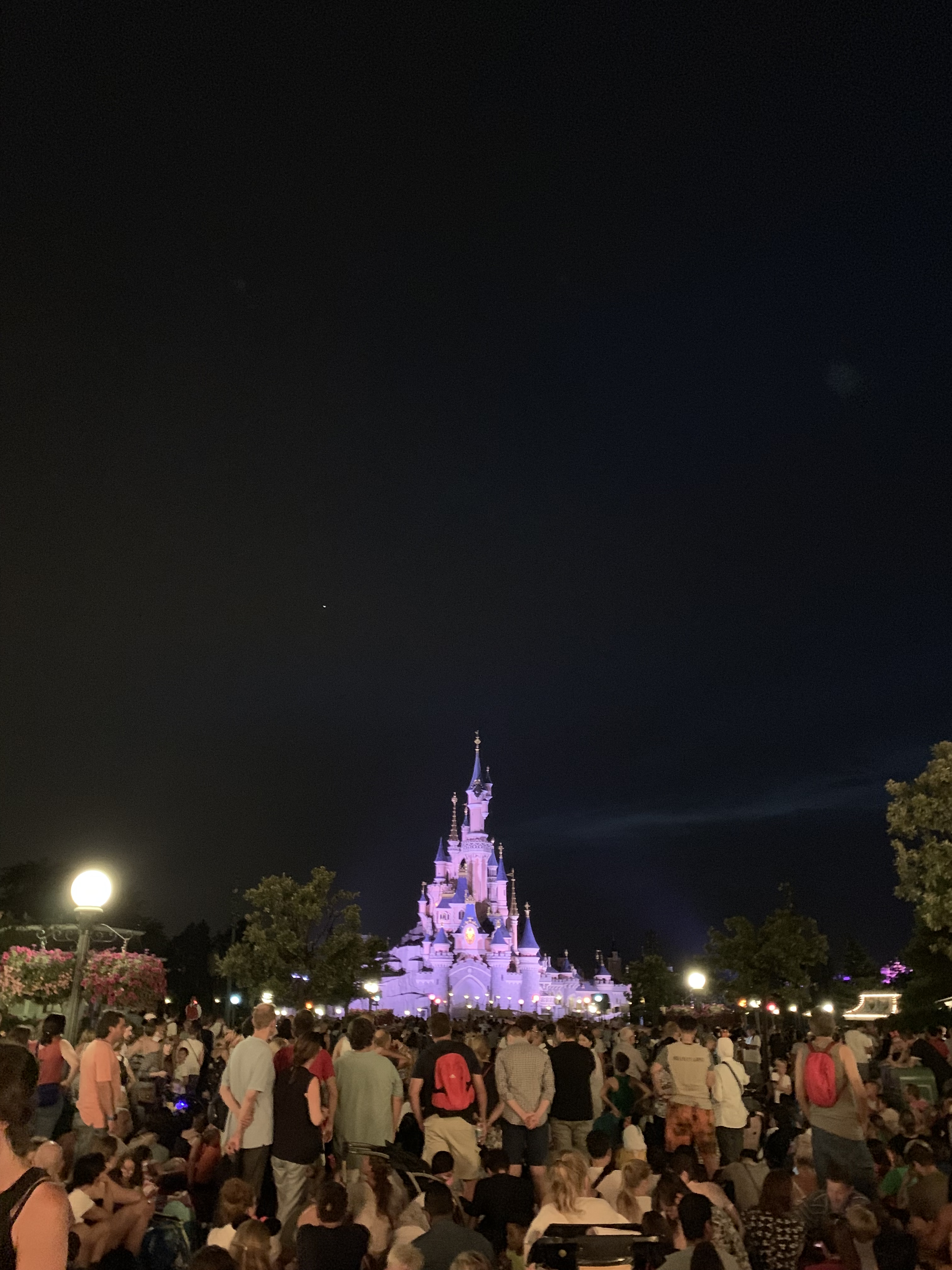
The card I drew was “Listen to the small voice.” So I did, I went on holiday and fun with my family in Disneyland. Once I was back I was able to get an initial edit of the footage done without too much resistance.
I had started this post when I did the blog review a few weeks ago but had not finished it, I nearly discarded it but felt it was important to document as this help to foreground something for me, this film, because I want it to be, is optimistic.
Skype tutorial
I had a discussion with Ken yesterday which largely focused on the voiceover, I had been seriously considering dropping the VO altogether but now it seems like it isn’t going anywhere. We discussed the way the imagery was developing to position the audience in a meditative space, and it seemed that the audience would need a frame of reference for what they would be meditating on. The voiceover needs to be this framing device with a theme of ‘possibility’.
Progress update – an edit
After finishing filming I spent some time collating and digesting the footage that we had captured. I played around with it in some temporary projects, layered it, graded it, messed with it, destroyed it. I deliberately didn’t keep any of that playing, I just wanted to spend some unconstructed time with the footage.
Then I took some time off from it, I read some books, journals and went on holiday.
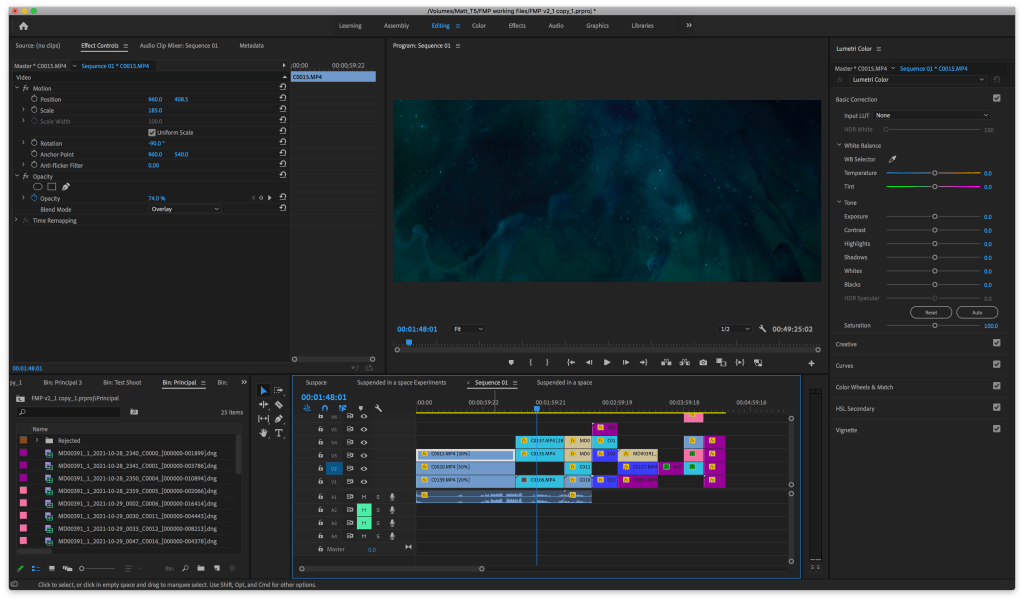
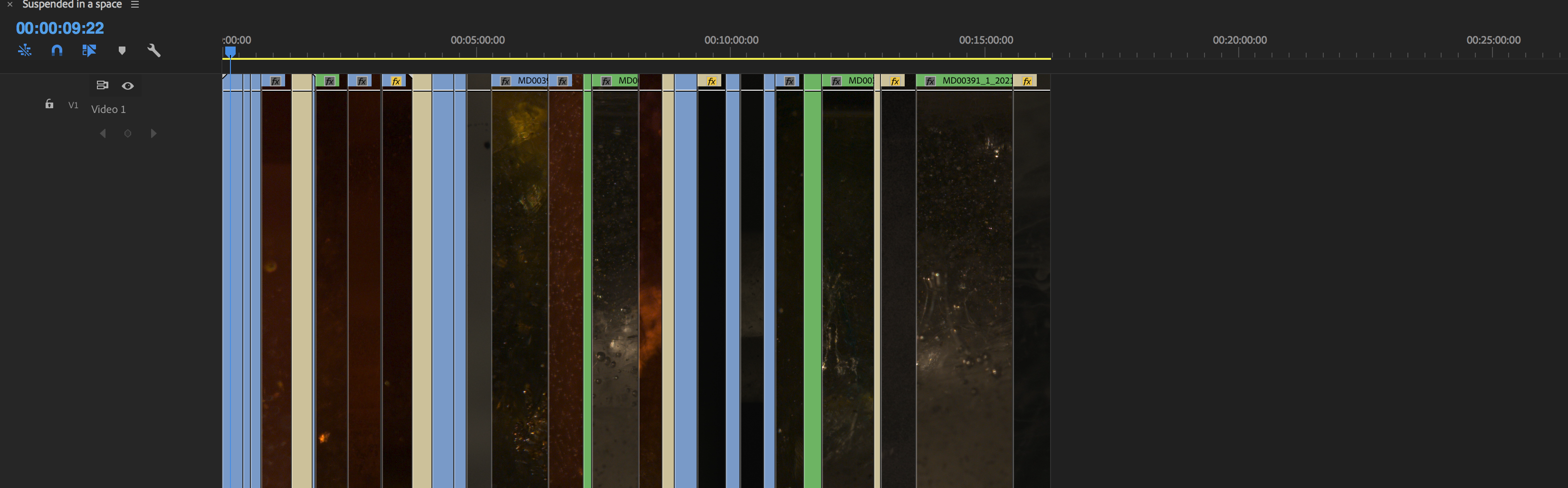
I reconnected with the footage and did some simple colour coding of the files to give me a starting point for visually getting an idea of how to sequence the clips (magenta and purple clips were rejects). Green clips tended to have more movement, blue clips were stiller, tan clips were cloudy. I used this as a quick way to give a rhythm to the film.
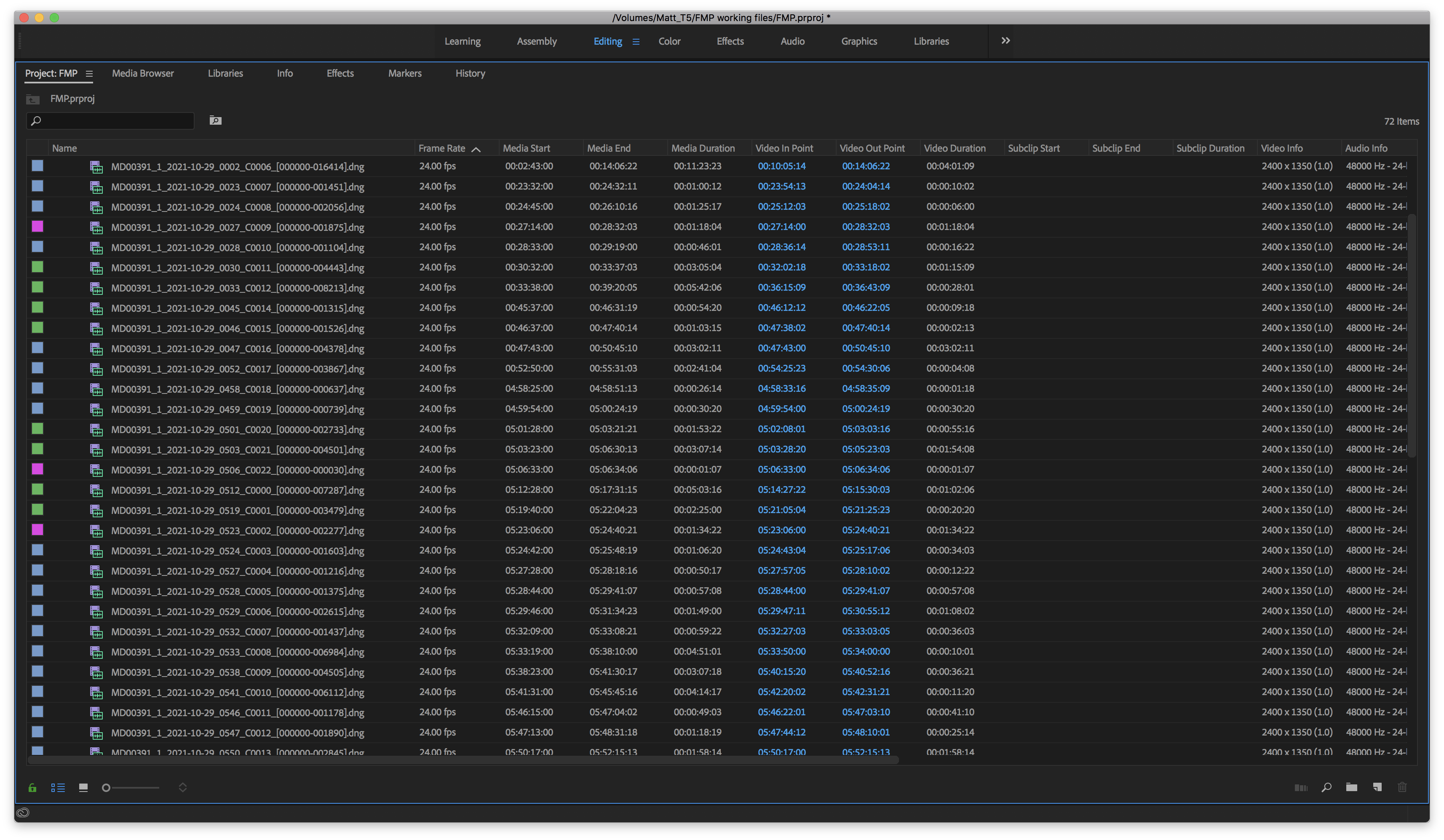
I didn’t think that file names would be that useful for organising here as they would would be largely similar, bubbles in liquid 1-13.
I started working with some sound ideas that are developing from earlier projects. I haven’t totally rejected the voice over concept but I wanted to put something together that didn’t use it at all.
The sounds are layers of distorted rain and sea sounds that I have recorded over the past few weeks. It is fairly simple at the moment and doesn’t have enough layers or texture but starts to give an idea of a possible direction.
We were in Paris in the middle of the heat wave, as a new Prime-minister came to power in London, contrasted with democracy protests in Hong Kong, and rallies by the sitting US President were eerily similar to less democratic periods in Europe. I am making a film that dreams about the end of time, how much should it respond to now.
Final Project Principal Photography – 10/07/19
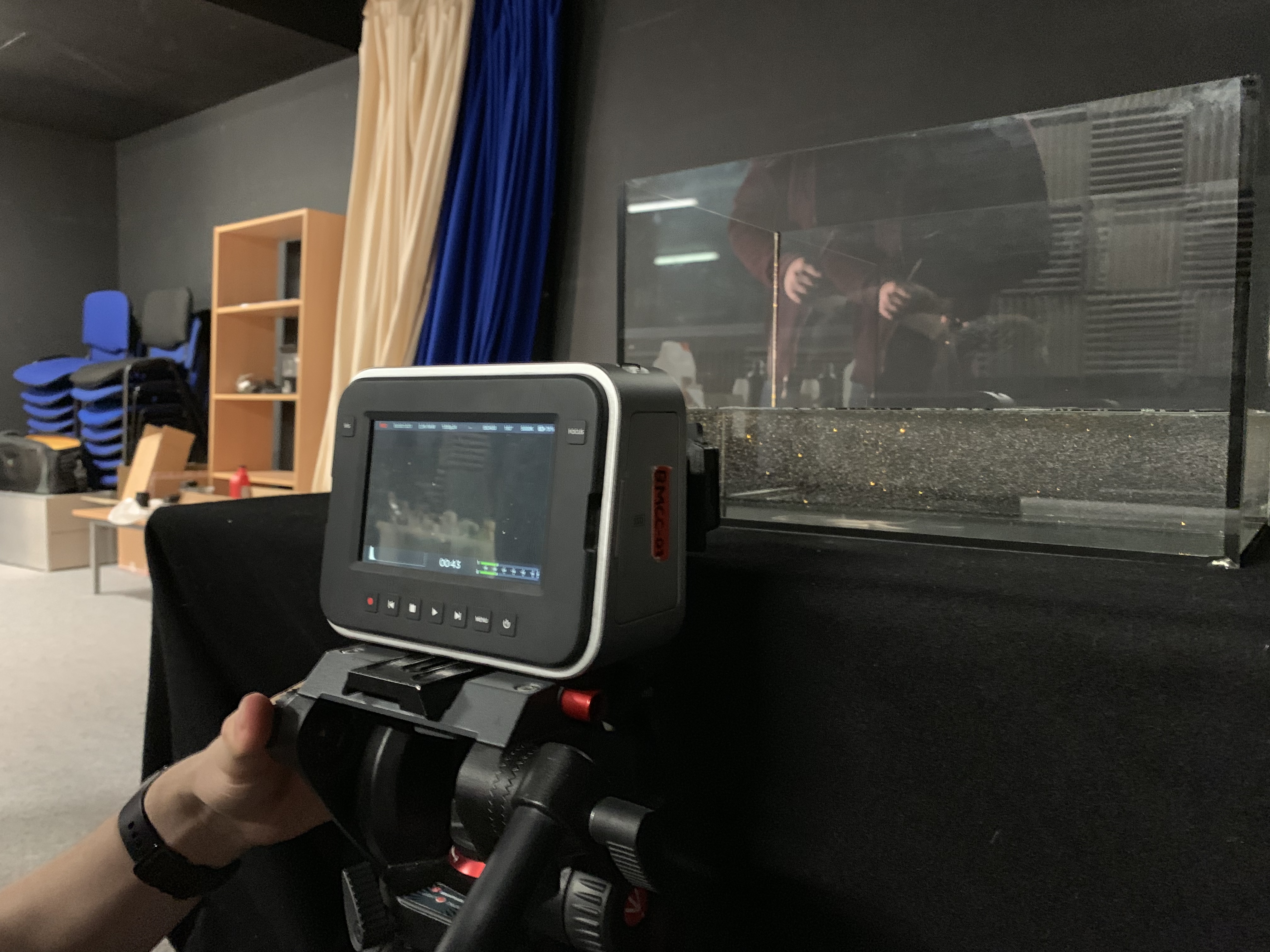
Last week I spent the day playing with Glycerol, drawing inks and acrylic paint again. After the test shoot the day was much more methodical, although it was still difficult to predict what would happen with the different mixtures I had broad ideas about how to get as many shots from one tank as possible, the acrylic was always the last to go in as it quickly fogs the whole tank.
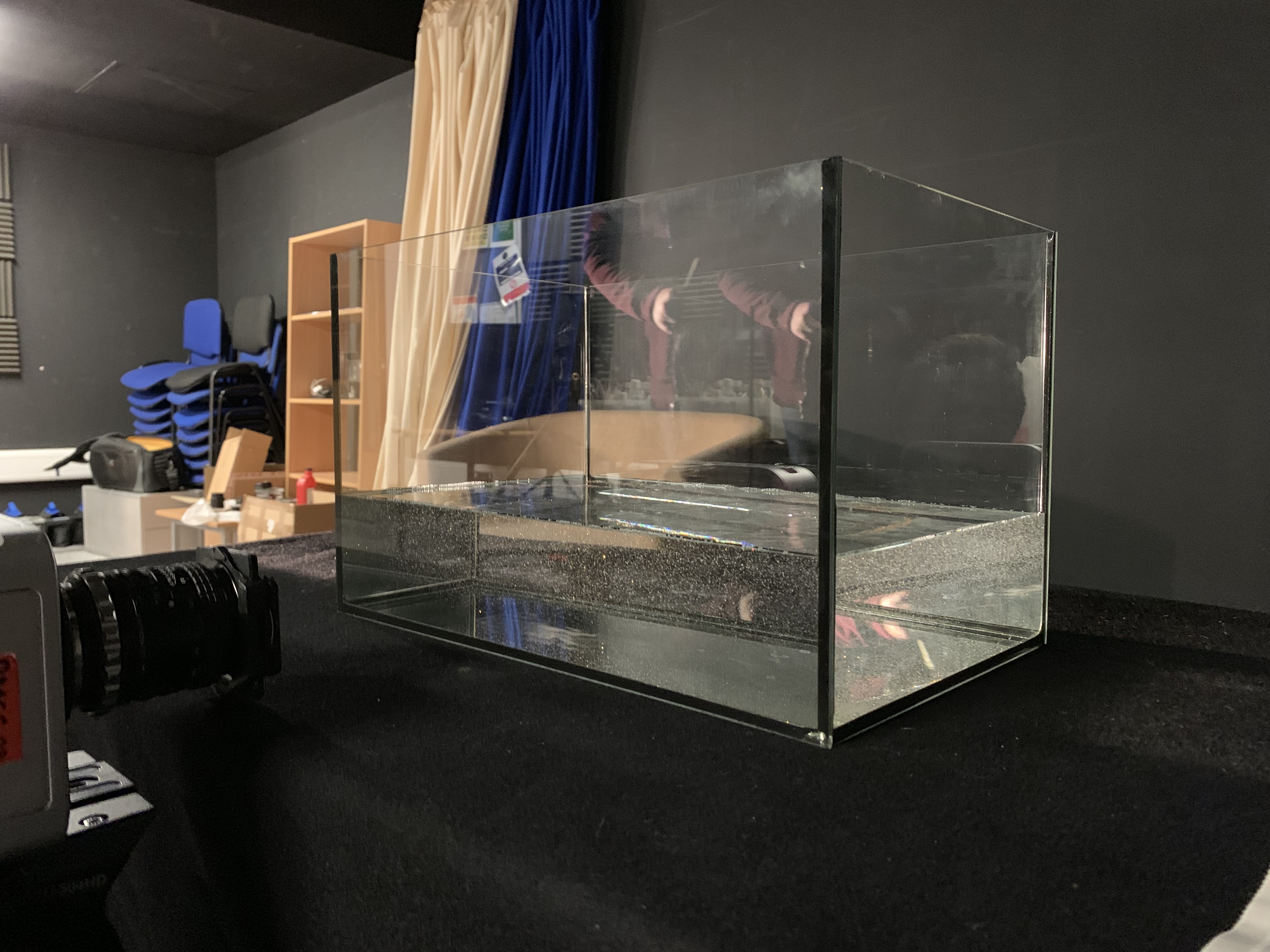
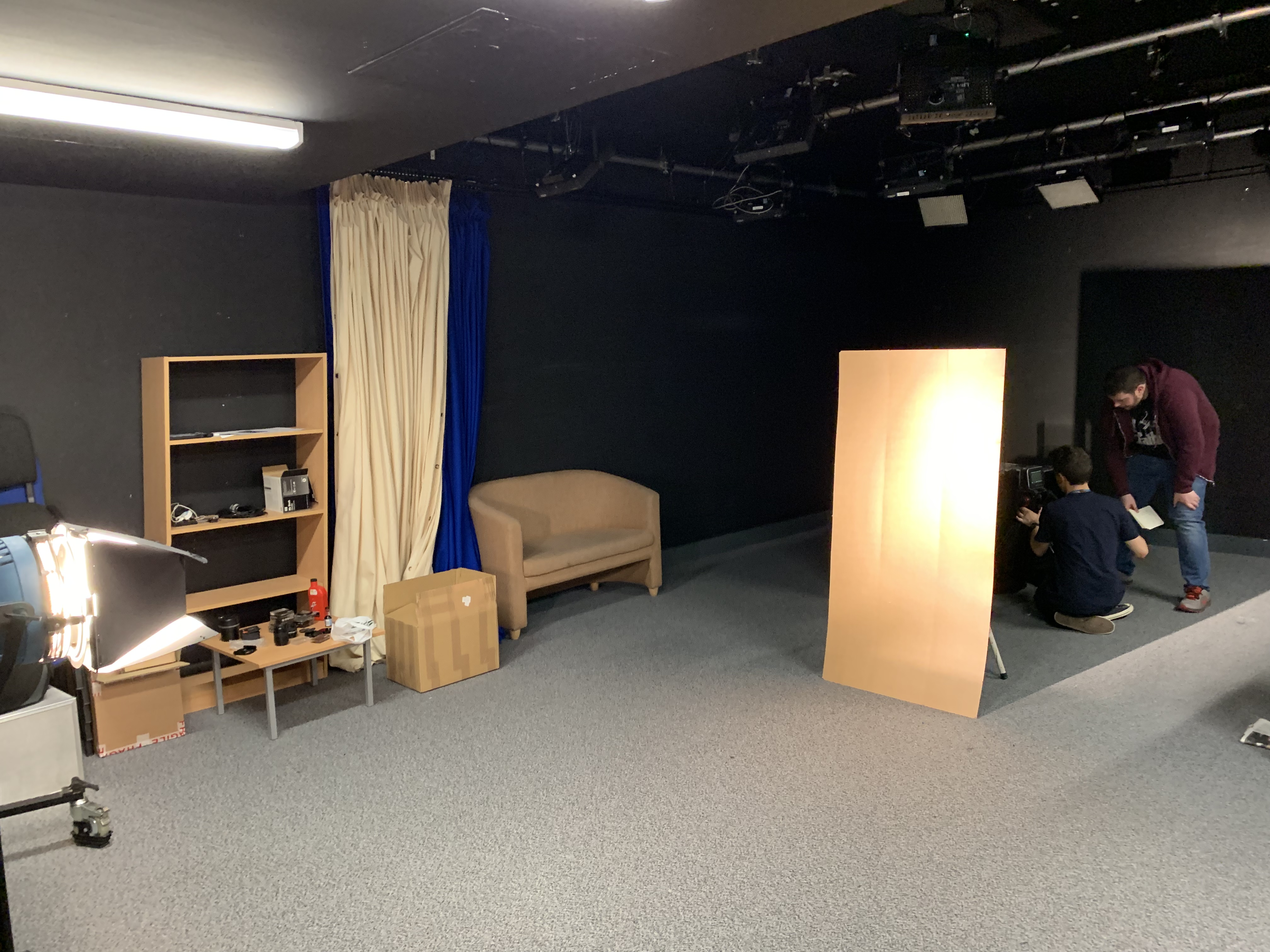
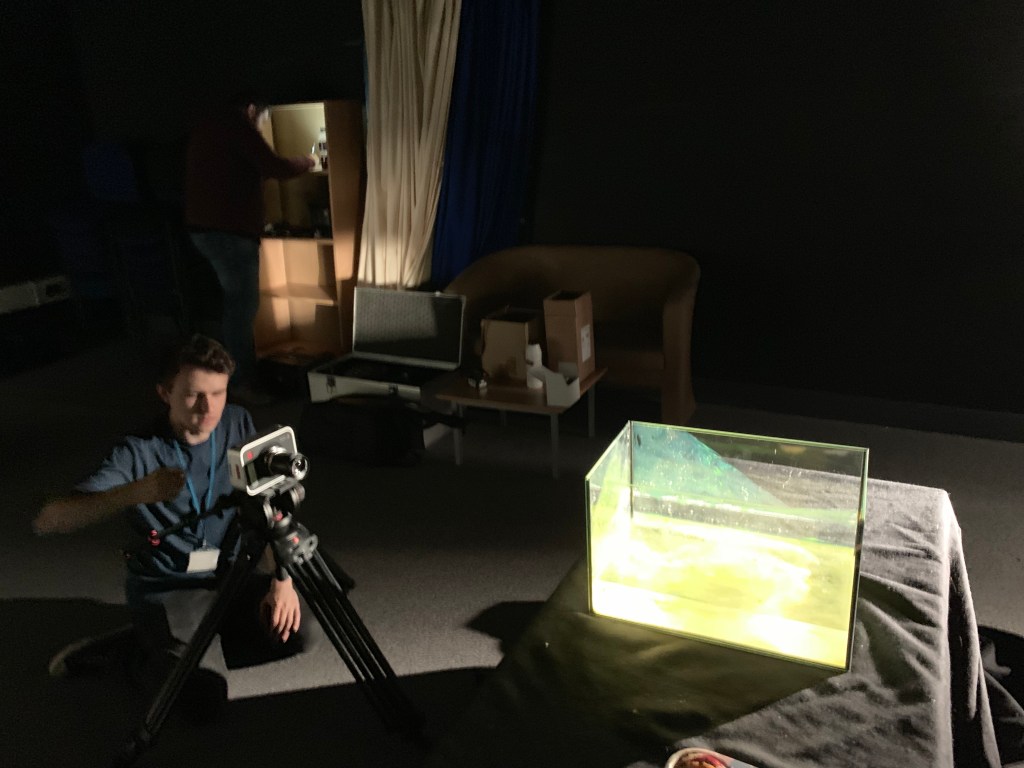
One of the changes from the test shoot was moving the light further from the tank (as far as we courgette it in the studio) and moving the improvised flag closer to the tank. This gave sone really useful control to how the tanks was illuminated, we were often able to create a thin shaft of light that highlights part of the tanks contents.
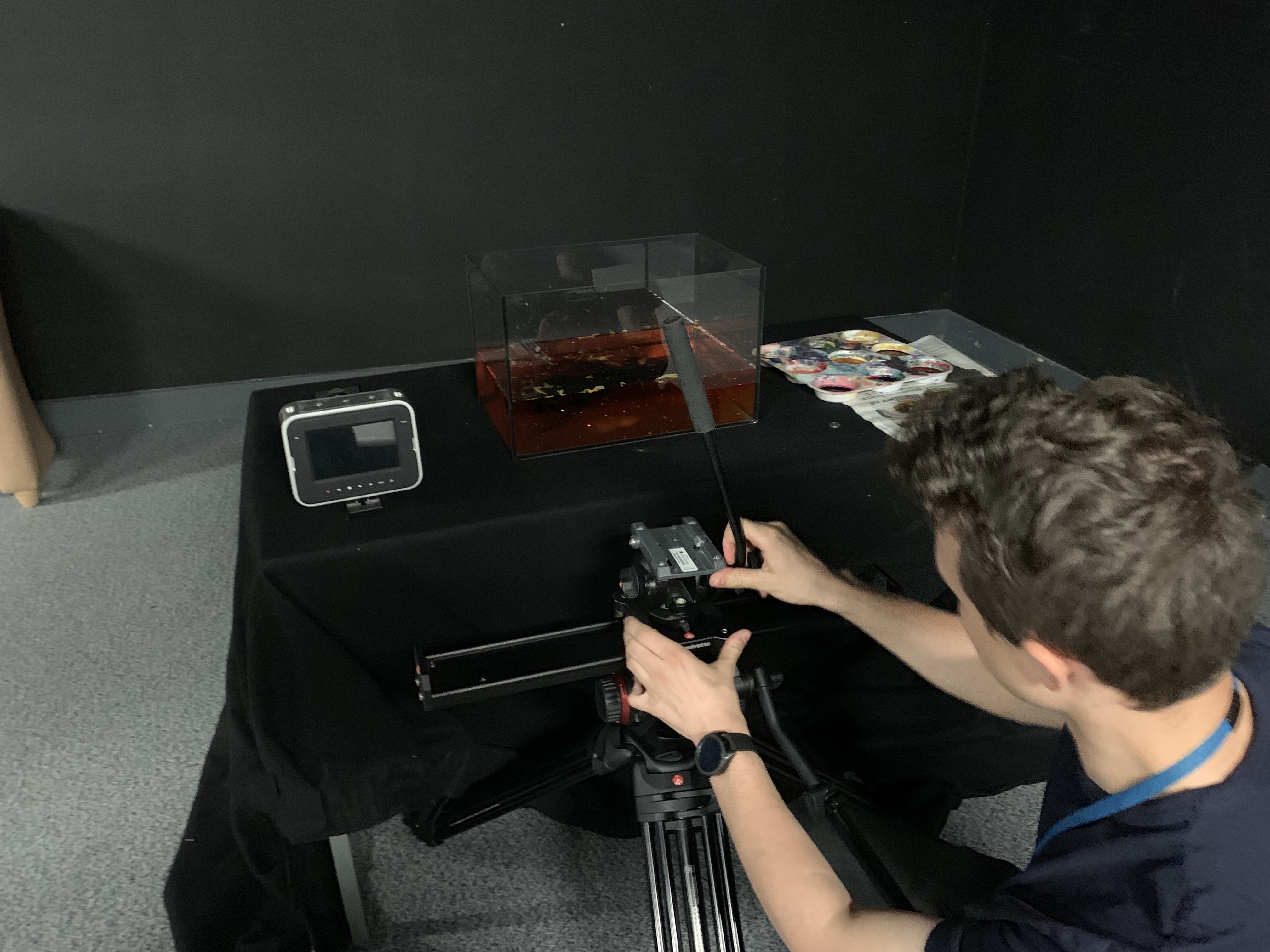
Another change was the use of a slider to create some dynamic but stable movement whilst the contents of the tank are moving very slowly.
It was essential having a crew helping out, it would have been impossible to achieve without a few other skilled hands on board.
Example Images
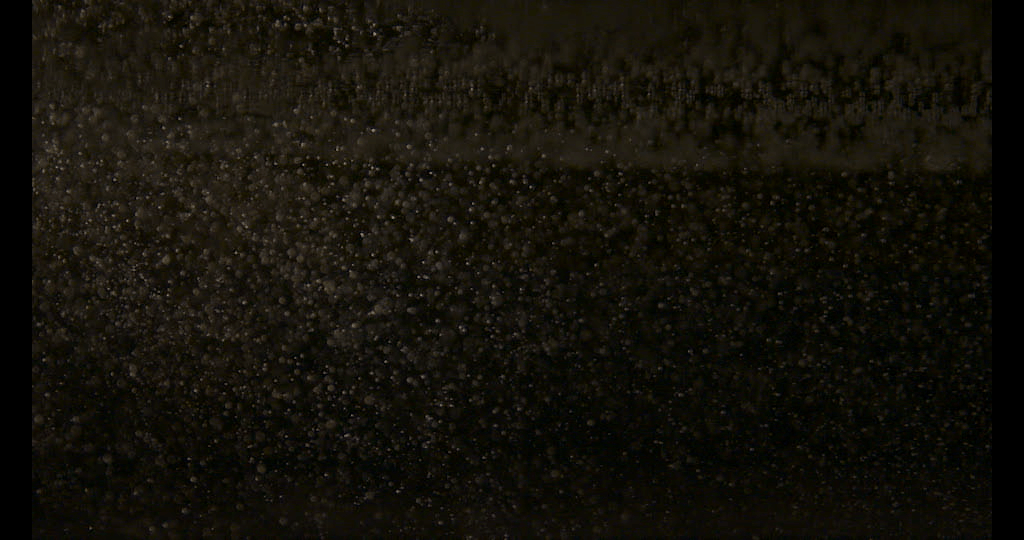

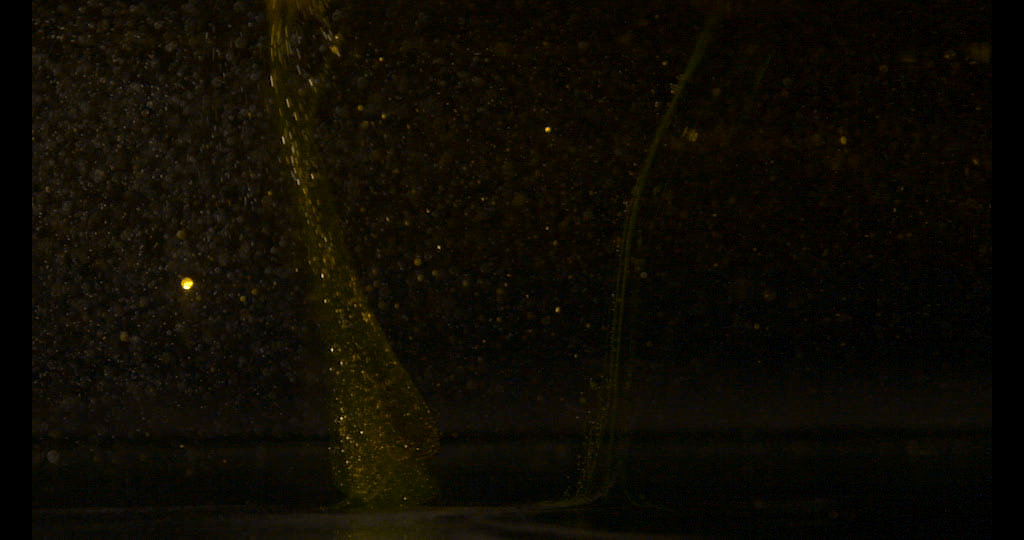
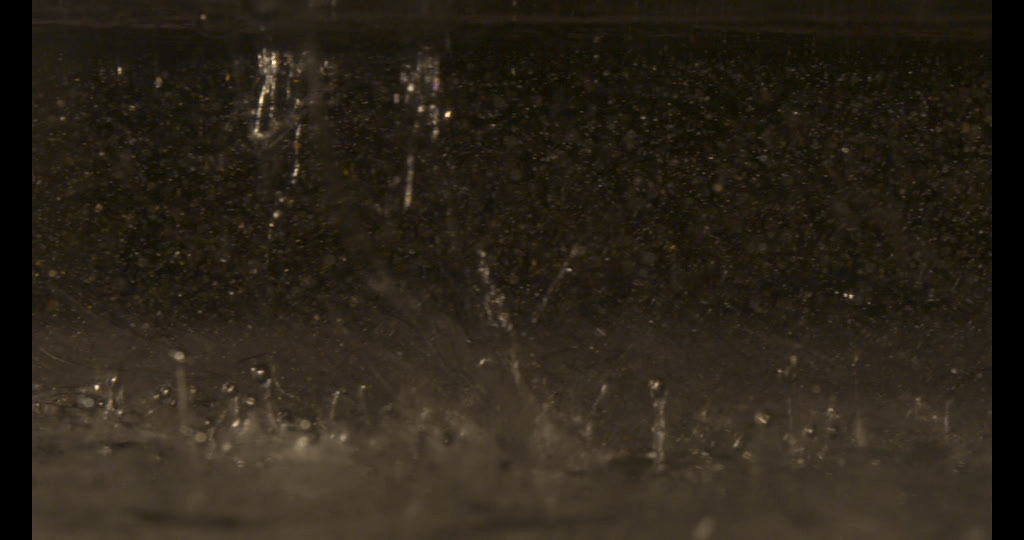
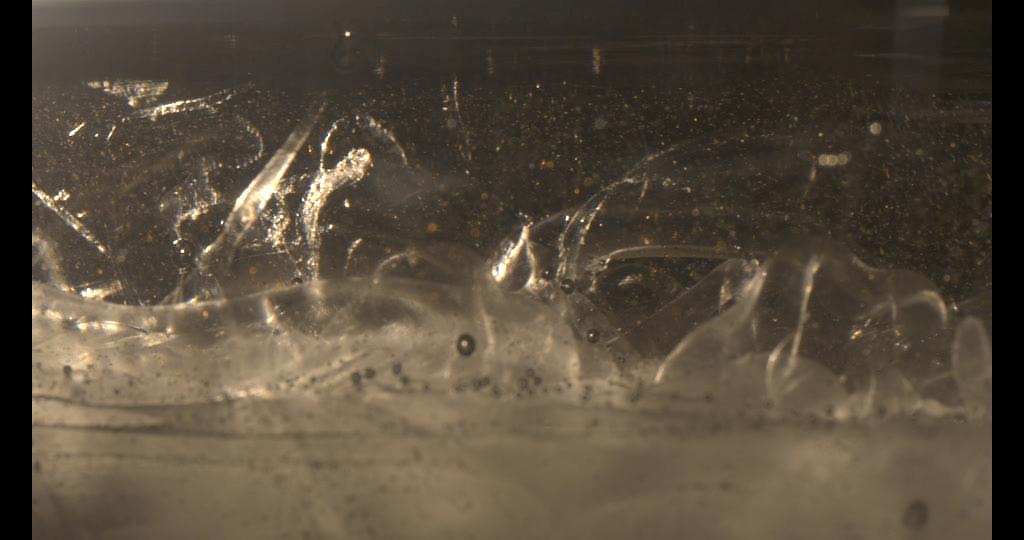
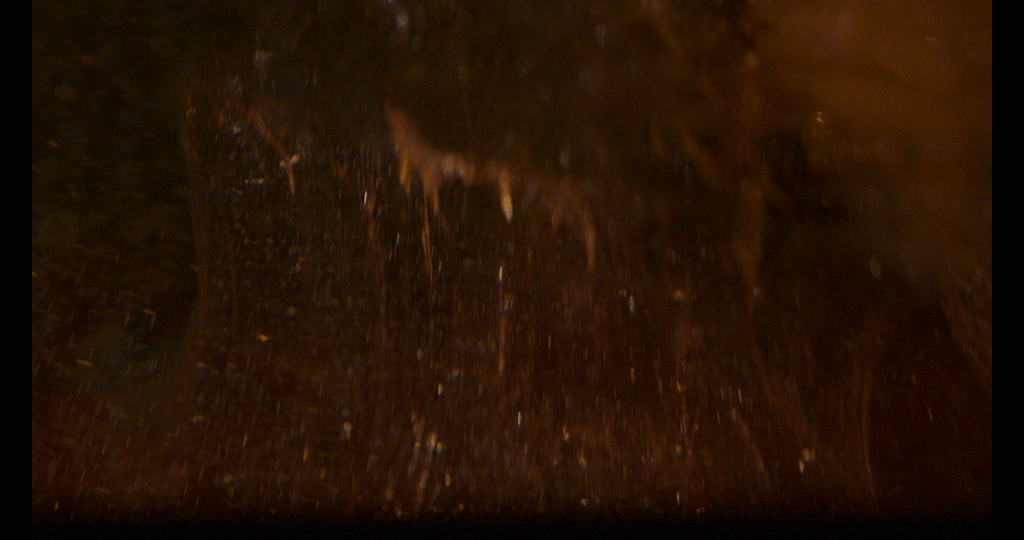
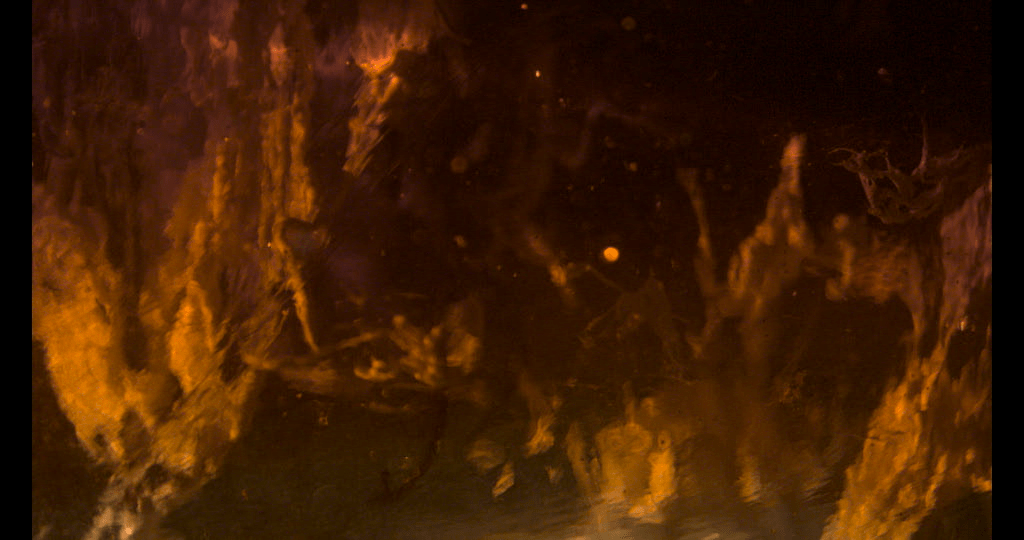

Visual Inspiration
This was another piece of visual inspiration that I found on my search. Really liked the depth to the images and the combination of transparent and opaque elements.
Test shoot – 3rd July
I organised a test shoot with the two crew members, Alex and Callum, who had agreed to help out on my shoot. I have worked with both of them before and this was a really fun filming session.
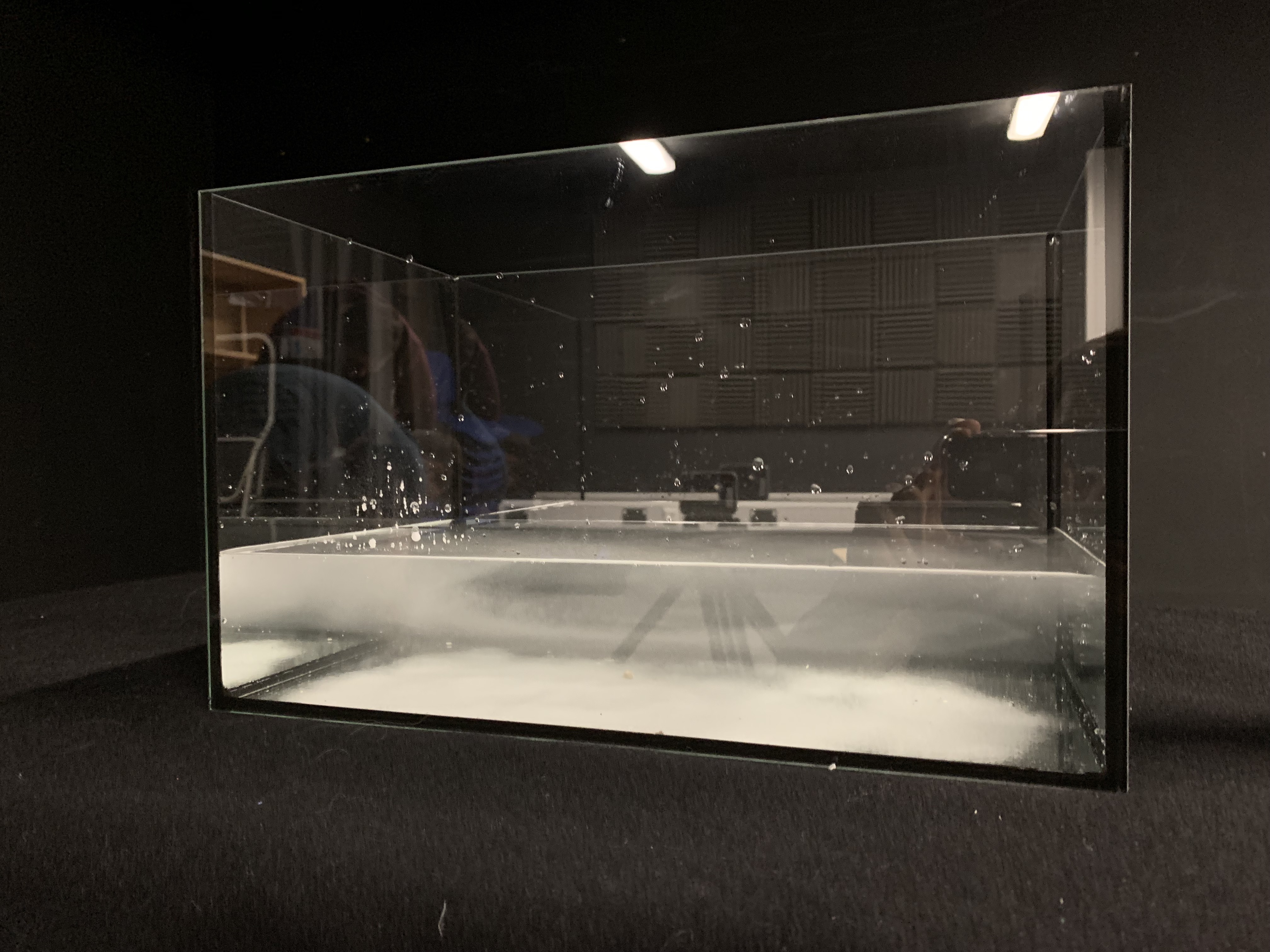
I had collected a fish tank, salt water, glycerin, corn syrup, acrylic paint, ink, glitter, and some syringes that come with a popular brand of children’s liquid paracetamol. I have filmed (and photographed) some ink dropping into water a few time before but this had always been very representational, it looked like ink dropping into water, here I wanted something more abstract.
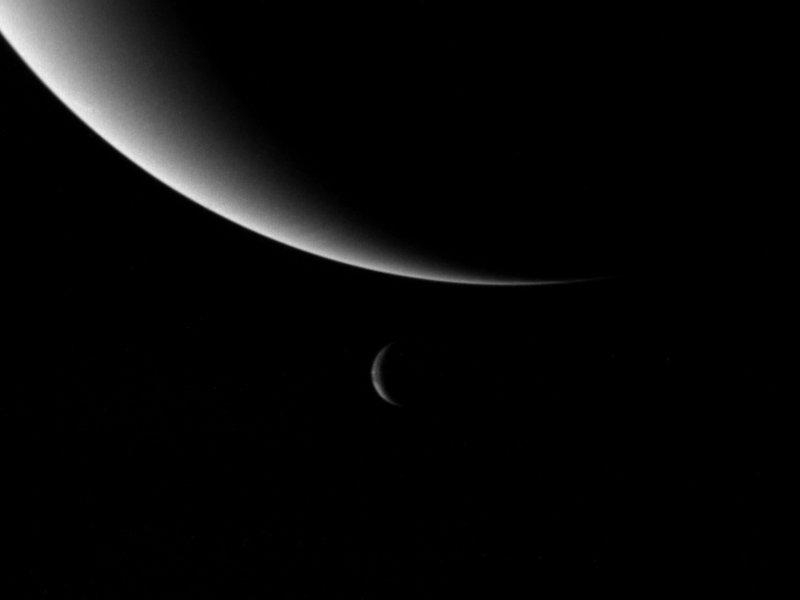
I want to try and recreate the lighting from some of the planetary images taken by probes such as voyager. After studying a few of the images it seemed that a hard light source as far away from the tank as possible would be the starting point. I thought the softness was probably coming from the atmosphere scattering the light which would likely happen in the water.
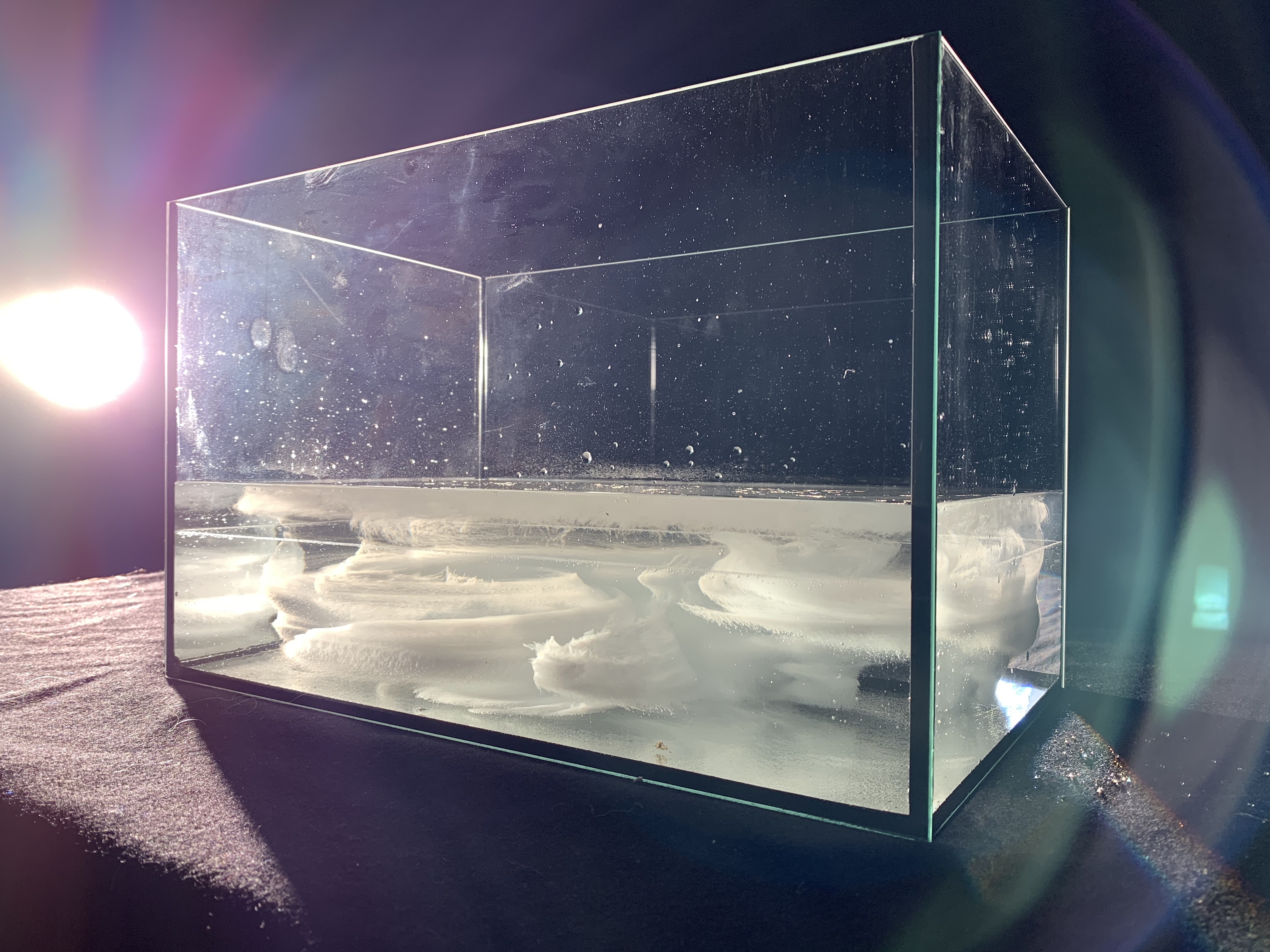
While I mixed the ingredients Callum took charge of camera with Alex providing production duties, including taking the detailed notes that I often forget once I get invested in experimentation.
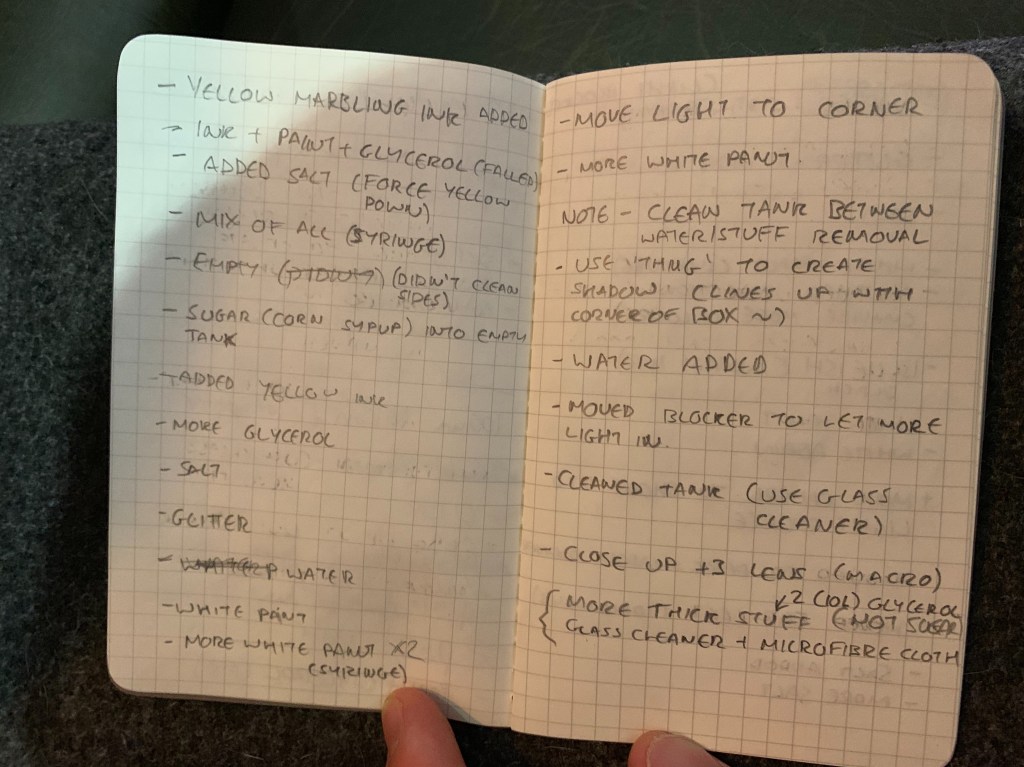
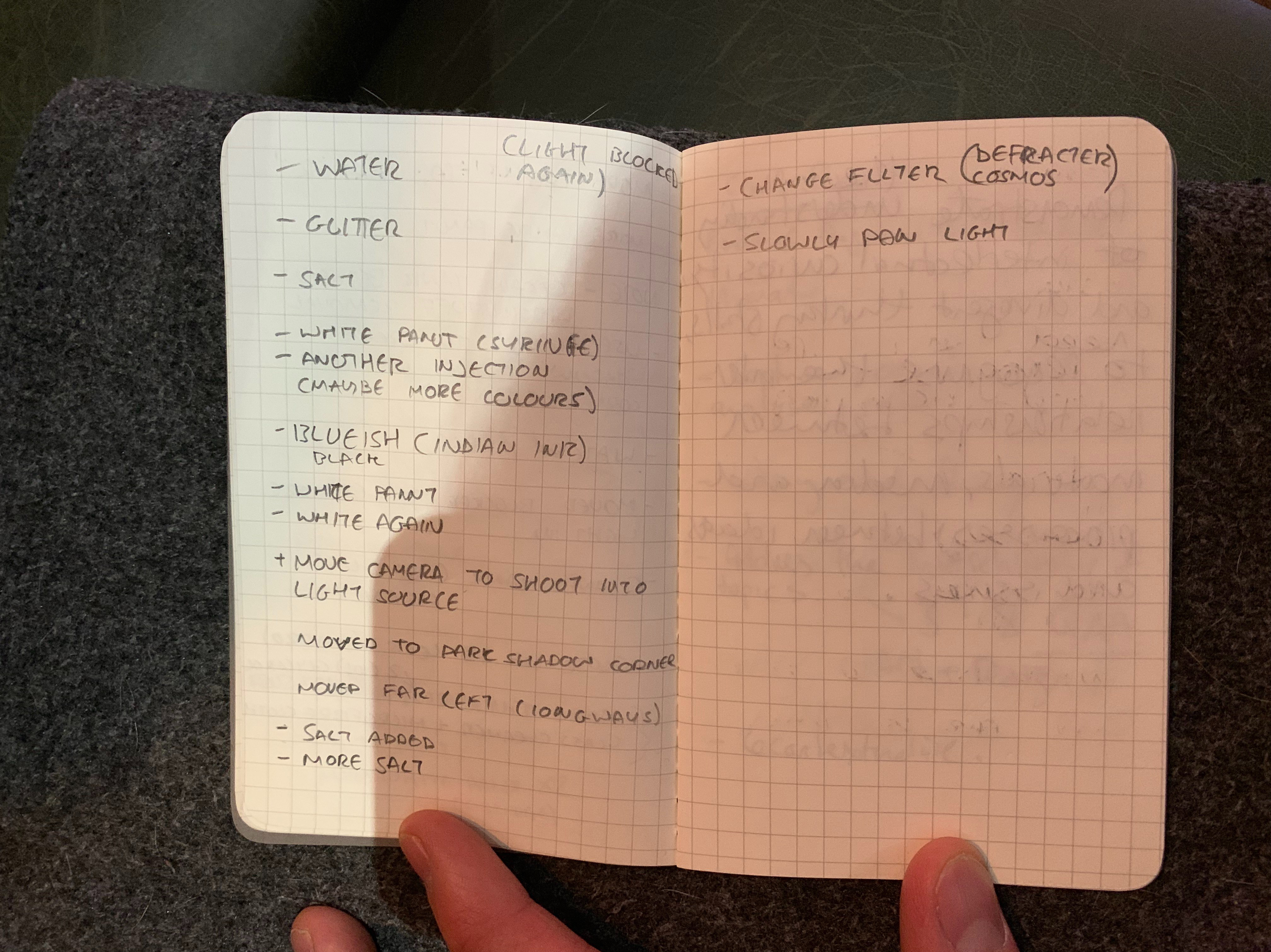
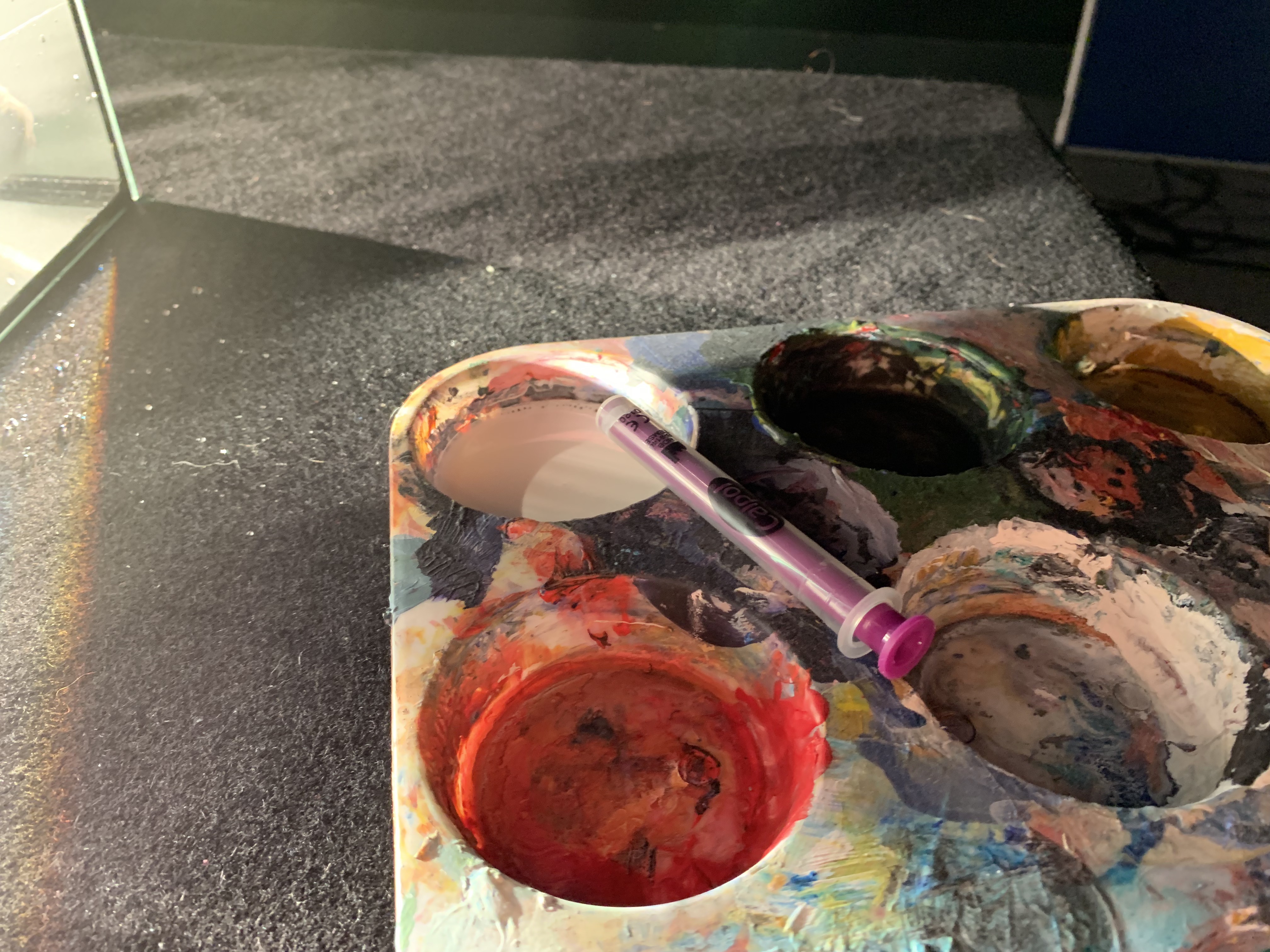
After a few tests adding salt and glitter to the tank to check focus I injected a milky consistency of a acrylic paint into the salt water, this produced some interesting blooms initially and the cloud like swirls as it settled.
We tried to let the camera role until the movement stopped completely as often the gentle swirls were more interesting once the water started to settle.

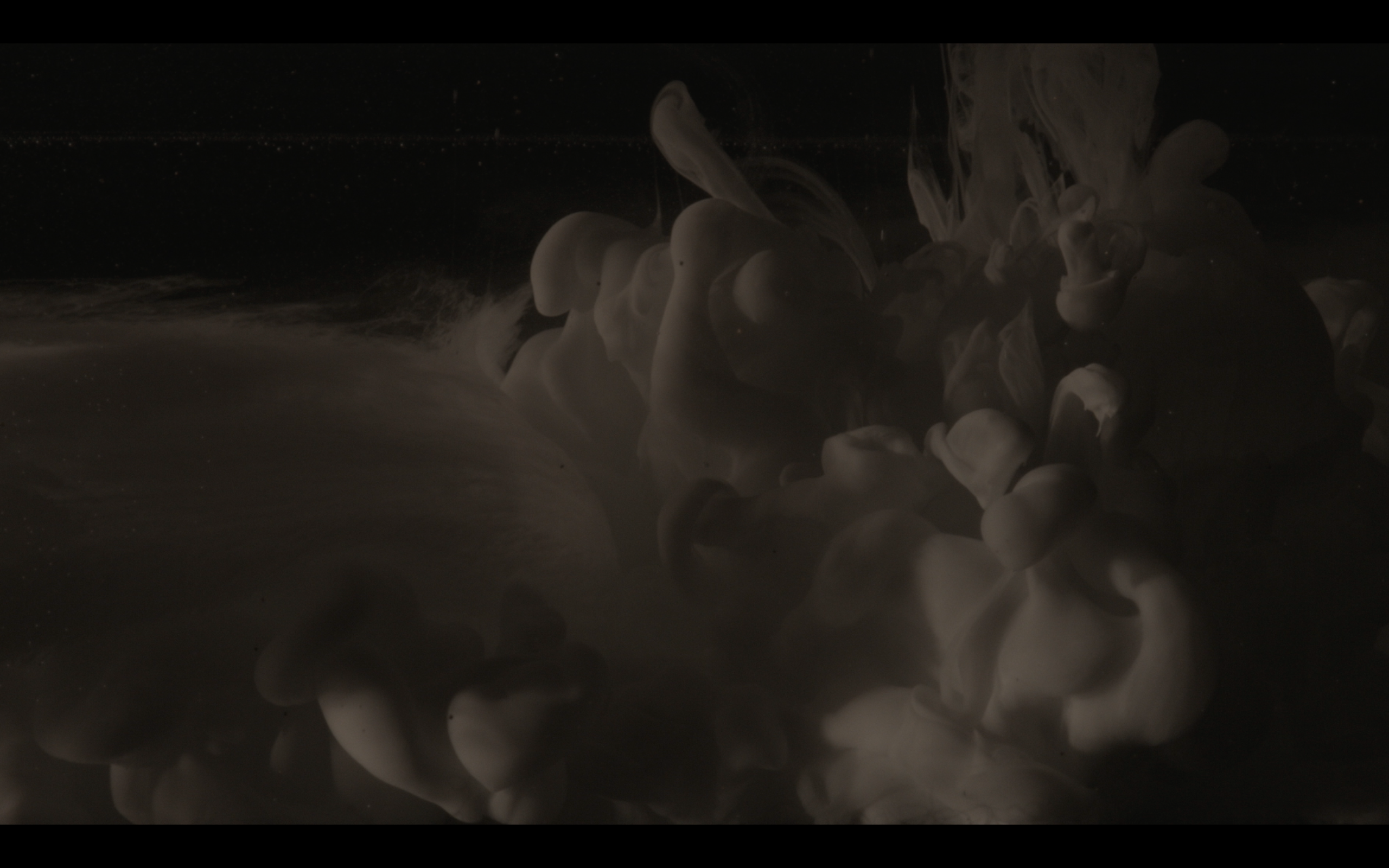
My initial inspiration for these images was marbling so I had got hold of some (washable not oil) marbling inks, but these just floated on the top of the salt water. We tried adding the corn syrup, this did aid the mixing but the sugars started to crystallise and it quickly became hard to work with.

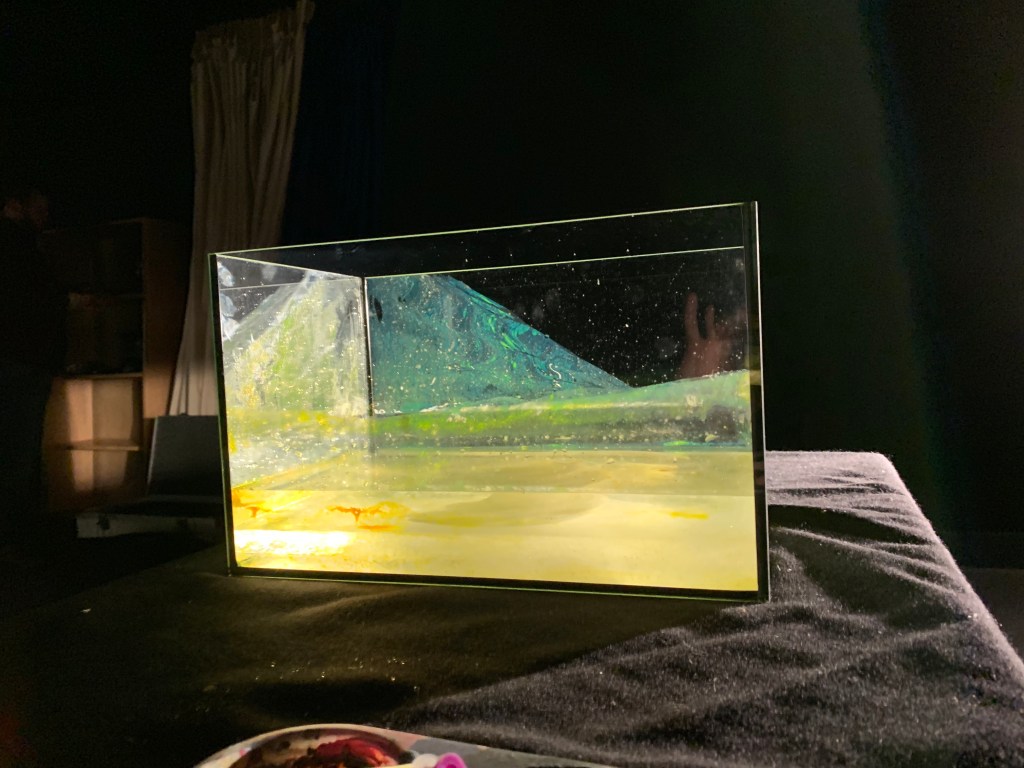
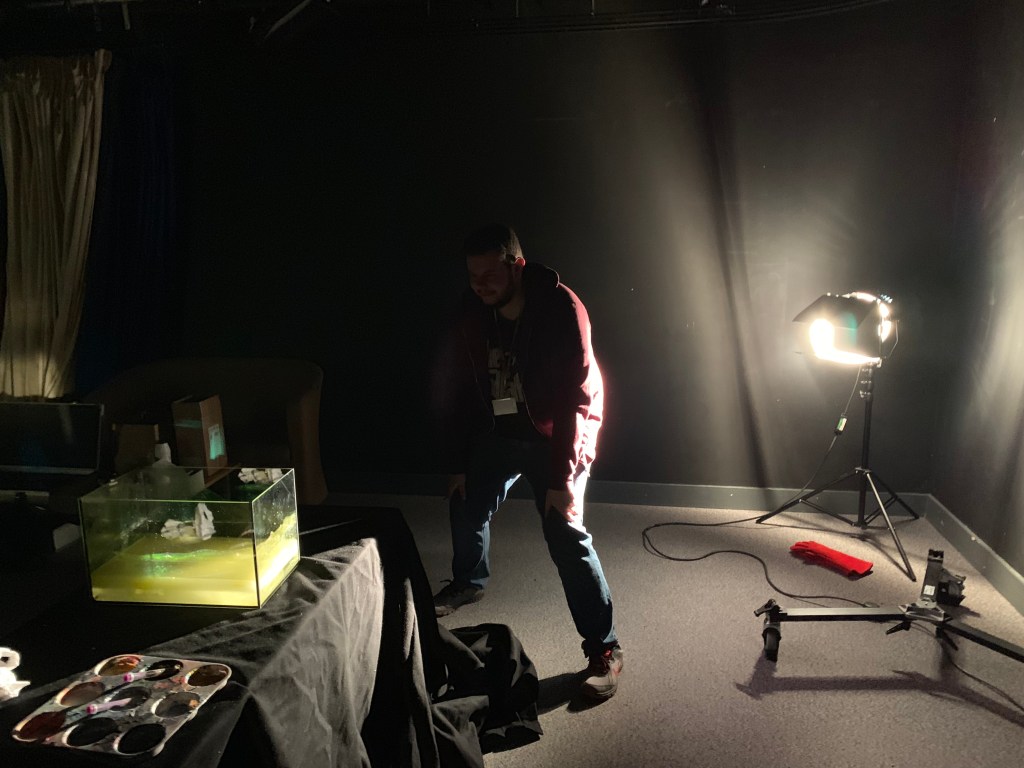
We were about to clean the tank when Alex walked in front of the light, Callum spotted that the by narrowing the angle of light further it created some really dramatic effects.
After a difficult tank clean, sugar and yellow ink crust, Callum suggested trying the close-up adapter that he had for the 200mm lens we were shooting with. As well as the white acrylic I also added some black drawing ink this time. With the close-up lenses shallow depth of film this produced some really soft dreamlike images, some of which looked really cosmic.
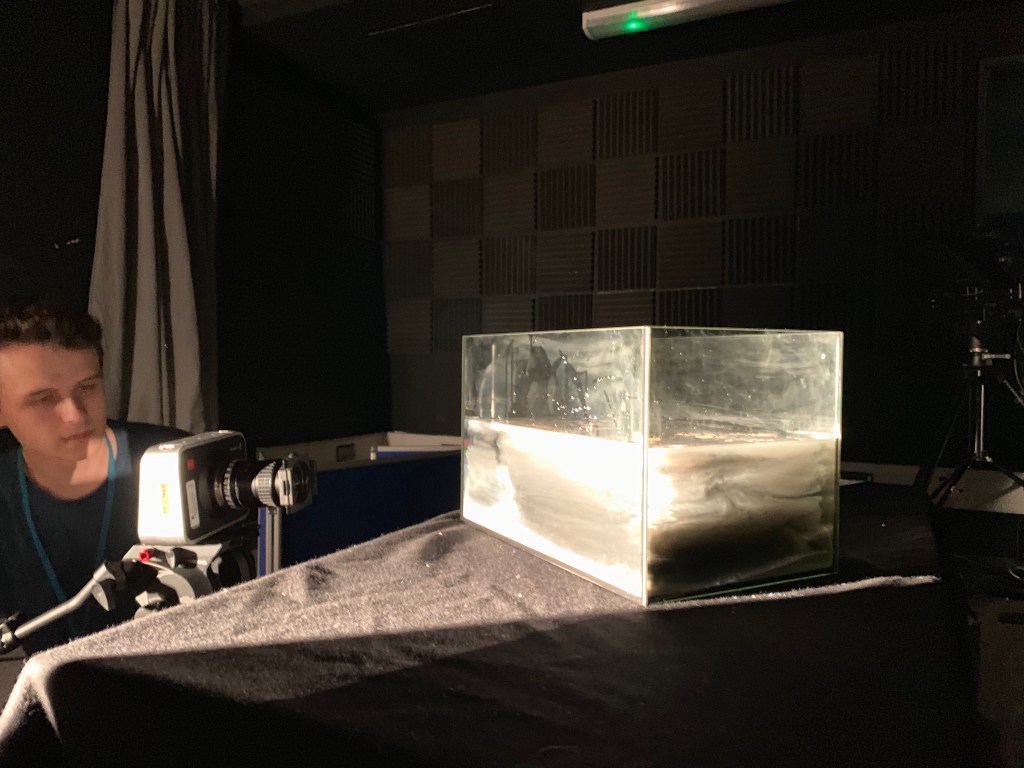
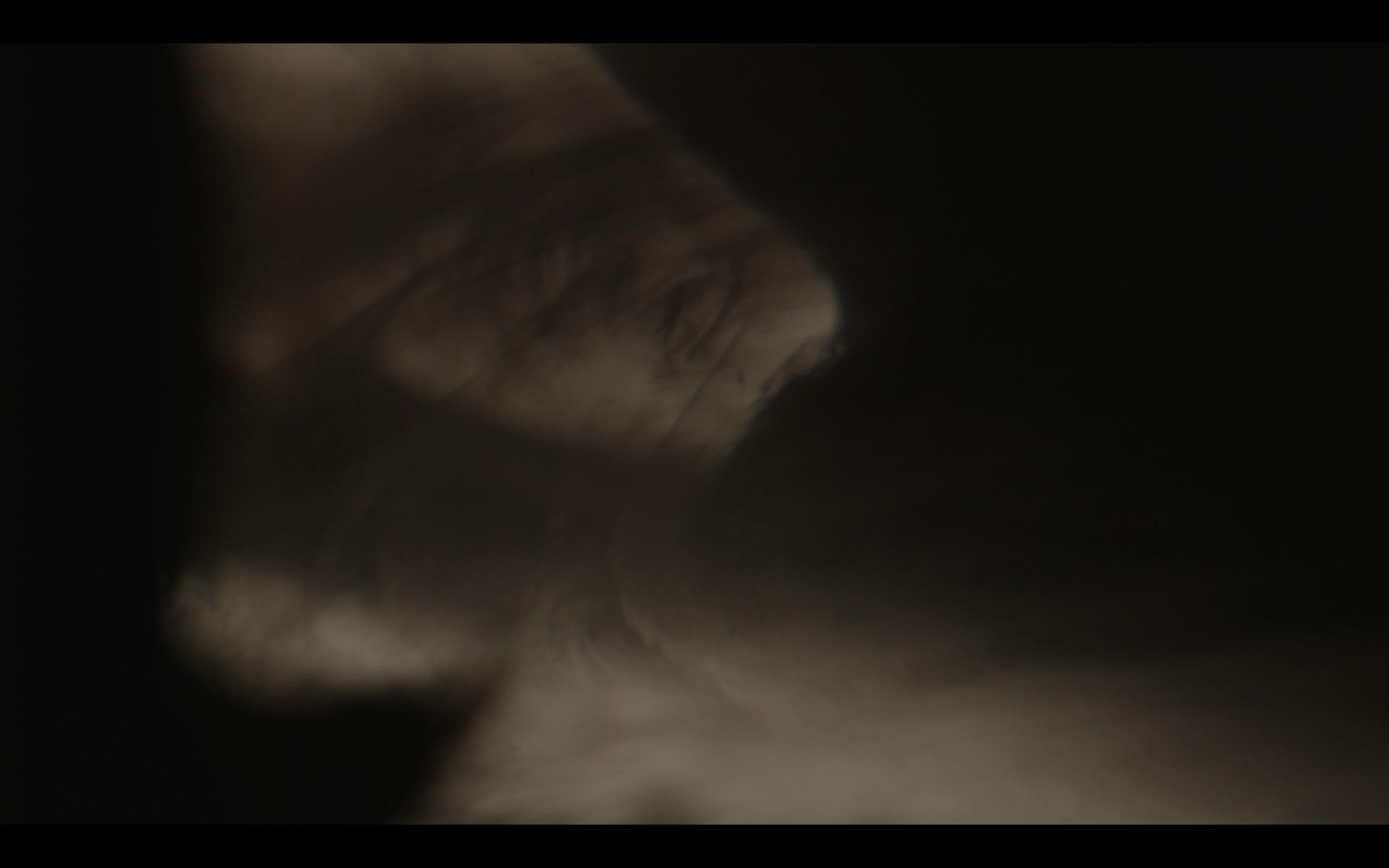

Although this was only intended as a test shoot there was some really useful images captured, I have edited these into the audio sequence that I created to get some feedback last week. That feedback was really mixed regarding the synthesised voice with a number of people feeling it was difficult to follow due to the monotonous pacing. I am going to work with it a bit further before moving away from it as I don’t have another direct for the voice over at the moment. I have another day of filming planned next week where I going to work with the glycerol further, the higher viscosity meant that it didn’t ‘slosh’ as much in the tank creating more stable images, the corn syrup worked much the same way but the added cleanup time was not great.
How To Shoot A Liquid Flow – DIY Photography
How To Shoot A Liquid Flow – DIY Photography
— Read on www.diyphotography.net/how-to-shoot-a-liquid-flow/
Having tried to help a student with a similar idea few years ago and had mixed results I’m scouring the internet for tips.
I am going to experiment with the viscosity of the pigment and water (or other colourless medium) to see what works best for cosmic effects.
The tip on here about checking focus with a ruler is simple but I’m not sure I would have thought of it to solve that problem.
Data Sonification
I thought that this film had some really interesting arguments regarding the problems with using sonification to express data and suggesting that this is the sound of an object. But this is exactly why I want to use it in this film, I want to give an artists impression of gravity, radiation etc. as experienced by the character in one of the only ways that can be represented on film, sound or vision.
In space no one can hear you scream.
Alien, Ridley Scott. (1979).
As the visual language is already fairly developed, there would be no sound to record in space so music inspired by, even driven by these phenomena seems like an appropriate way to deepen the immersion of the experience. As I have looked at in my visual development this is not about reality but rather an interpretation of it as experienced by the character that I am creating.
I am starting to experiment with using different data sources to drive different instruments, similar to the way the plant music was created by different plants playing different instruments.
- Gravity on base synth
- Magnetism on rhythm
- High energy particles on sound effects.
Maybe
Practical Inspiration
Glyerine, corn syrup, salt water, ink, glitter. Try it, see what happens.
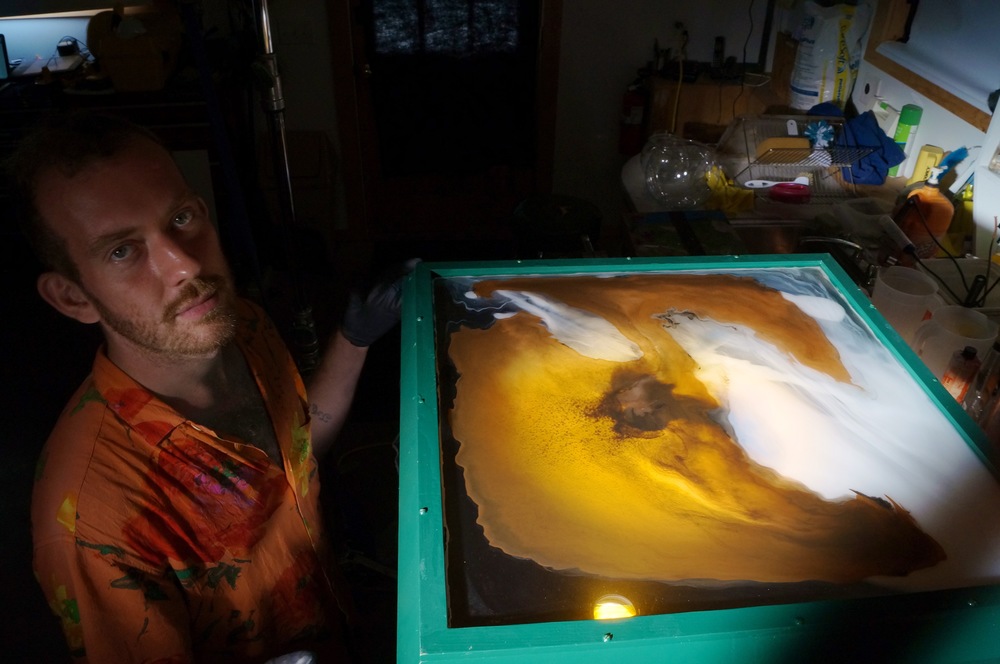
As well as the practical tips of how to achieve some of the effects which are eerily similar to what I already had in mind, there is a clear articulation of why I want to shot my film in a similar way.
Making space tactile and visceral rather than digital, I see as a way to bring about a physicality that is counterpoint to the internal nature of the voice over. It is an attempt to make the conceptual tangible.
Cyplant
Continuing to explore the topic of human relationships to machines I came across so MIT research that is creating plant-machine interfaces; Cyborg Botany.
The comment in the second video of the agency belonging entirely to the plant struck me. It seemed to link back to the discussion of the A.I artist, I tried to consider if the A.I artist had the power to direct the decisions in that scenario or if they were following the algorithm.
I tried to create a simple flow diagram to consider where the ‘agency’ might come into the creation process.

The seemingly obvious place for the agency to occur would be during the processing of the digital signal by the algorithm, but this would only be the case if this was not deterministic. It the same input always led to the same output then it would seem that no decision making was happening. This would be no different that running a filter on an image.

I tried to think about my own creative process, why do I think that I have agency in my creative decisions, I have tried to illustrate this in the diagram above, it feels like it is something to do with taking inspiration and then doing assessment, comparison, and clarification with this, it is not a direct processing but rather intensional decisions are being made. I thought about this in the context of human artists working with randomness, algorithms, or abstraction, it seems that there is still a processes of informed choice to work in this way, to direct the development of a process when it seems to be expressing something.
Aidan Meller is a specialist in modern and contemporary art who runs a gallery from Oxford and London. He said: “Pioneering a new AI art movement, we are excited to present Ai-Da, the first professional humanoid artist, who creates her own art, as well as being a performance artist. As an AI robot, her artwork uses AI processes and algorithms. The work engages us to think about AI and technological uses and abuses in the world today.”
https://www.artsandcollections.com/humanoid-robot-artist-ai-da-can-draw-from-life/
 mattprentice