
Marker explores the Peking of 1955 with the voyeuristic camera of a tourist, everyday life, history, people, art, parades, everything is judged equal to the collecting eye of the camera, it is a object to be captured. I think that I am very aware of this position in this film as I have walked that same path, seen those same sites (sights) as a tourist in Beijing. I have been the stereotype backpacking Brit seeking colour and exotic experiences.


Marker’s film is an interesting visual document of those moments, the camera lingers long enough for the viewer to experience the scene that is being captured, allowing it to live on, preserving it. From this perspective the equalising gaze of the ‘kino-eye’ judges all things that are infornt of it worthy of capture an preservation, something of the Peking of 1955 lives in Marker’s film.
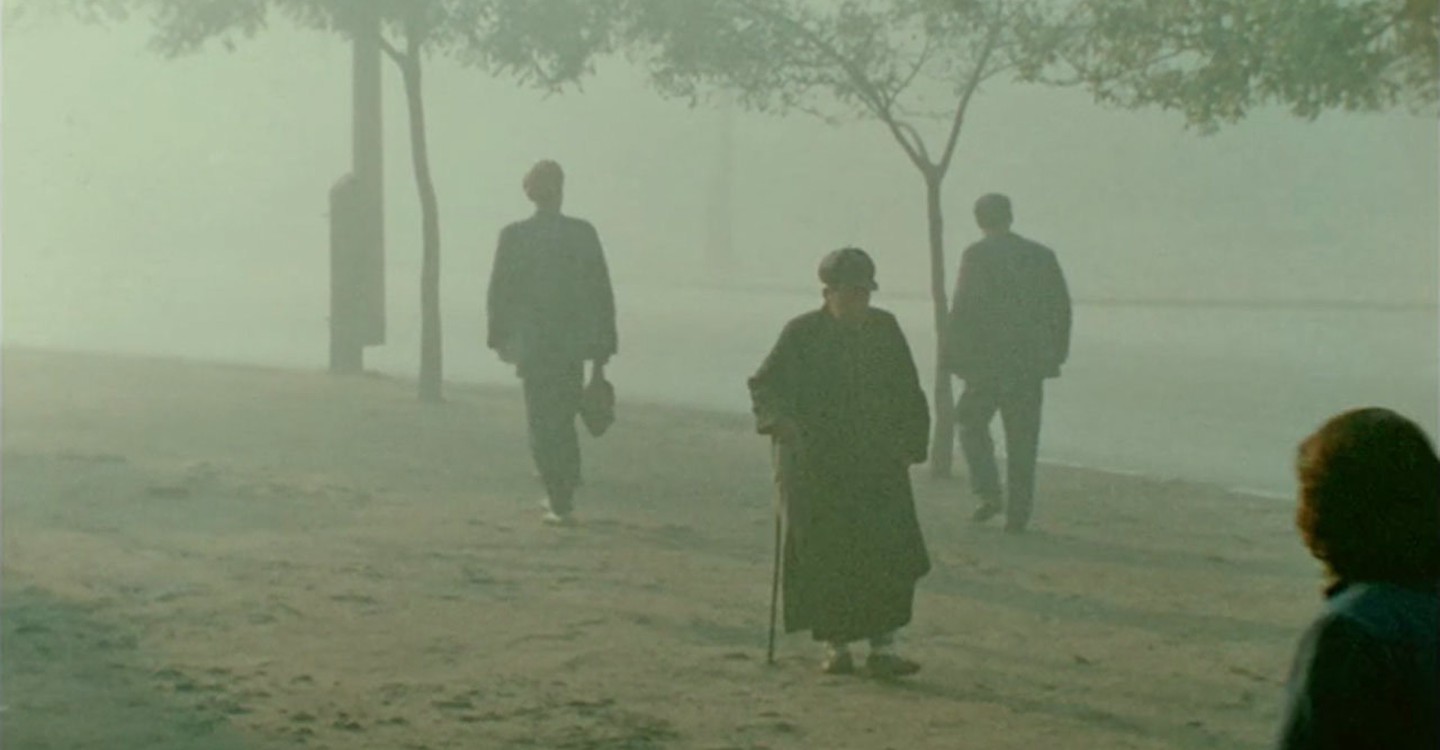
Marker’s voiceover acknowledges the subjectivity that the camera diminishes. As he describes the events that are onscreen he comments and interprets the images from his own perspective. The dusty morning he likens to politeness. This subjectivity is firmly established in the opening sequence when images associated with china are juxtaposed with the Eiffel Tower.
For 30 years in Paris I had been dreaming about Peking without knowing it
Marker
Marker establishes this as is exploration of his journey through this place, his experience of it. This is reinforced in a sequence in a school where he shows children looking at a book that he had with him, he describes their excitement at seeing the “exotic” letters on the page. In this moment he makes the audience conscious of the value judgements that he is bringing to the images with his narration. To the children Marker is as much a curious object as Peking is to him.

The price of modernism doesn’t seem so high when you consider the price of the picturesque.
Chris Marker (1956)
Marker’s phrasing, when discussing the painful walk of a woman with bound feet, clarifies some of the issues that I have wanted to explore with my films over the past two years. The tension between progress and tradition. Marker puts a price and value on both, an uneasy relationship, impossible to completely reconcile. This same complexity seems to be present in a globalising world as cultures are pressed together.
 mattprentice