As a counterpoint to the creativity of the A.I artist are the algorithms that are collecting sorting and processing the trails of data left behind by our 21st Century digital lives.
No two companies have done more to drag private life into the algorithmic eye than Google and Facebook. Together, they operate the world’s most sophisticated dragnet surveillance operation, a duopoly that rakes in nearly two thirds of the money spent on online ads. You’ll find their tracking scripts on nearly every web page you visit. They can no more function without surveillance than Exxon Mobil could function without pumping oil from the ground.
https://idlewords.com/2019/06/the_new_wilderness.htm
There is a reoccurring narrative at the moment that there are risks associated with the reduction in privacy that results from this data collection, and privatisation, I found this article our it succinctly.
My own suspicion is that ambient privacy plays an important role in civic life. When all discussion takes place under the eye of software, in a for-profit medium working to shape the participants’ behavior, it may not be possible to create the consensus and shared sense of reality that is a prerequisite for self-government. If that is true, then the move away from ambient privacy will be an irreversible change, because it will remove our ability to function as a democracy.
https://idlewords.com/2019/06/the_new_wilderness.htm
It doesn’t seem to be a new idea, Foucault was discussing it before the contemporary advances took place.
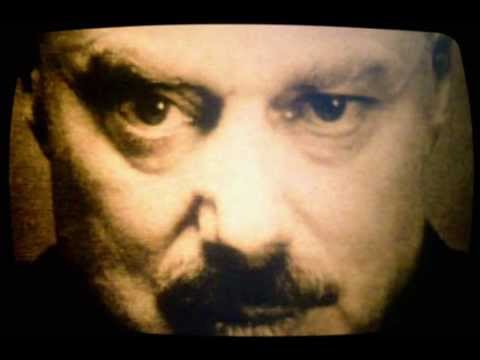
Foucault argues that the use of disciplinary power has extend everywhere in society – it is not only in prisons that disciplinary power (surveillance) is used to control people; and it is not only criminals who are subjected to disciplinary power.
https://revisesociology.com/2016/09/21/foucault-surveillance-crime-control/
I found the parallel drawn between the environment and privacy to be compelling as a concept.
All of this leads me to see a parallel between privacy law and environmental law, ①another area where a technological shift forced us to protect a dwindling resource that earlier generations could take for granted.
The idea of passing laws to protect the natural world was not one that came naturally to early Americans. In their experience, the wilderness was something that hungry bears came out of, not an endangered resource that required lawyers to defend. Our mastery over nature was the very measure of our civilization.
https://idlewords.com/2019/06/the_new_wilderness.htm
It linked to something that I have been considering when writing the script for my current film. Life needs resources to continue but these resources are dwindling, as we master our environment we can control it more completely, but this process of claiming controlling is reductive, it destroys the delicacy and beauty of the original thing. There are already those who are concerned about how we will consume the solar system once we reach out into it.
“On a timescale of less than a millennium we could have super-exploitation of the entire solar system out to its most distant edges,” the authors wrote. “Then, we are done.”
https://www.livescience.com/65472-scientists-propose-solar-system-national-park.html
Will ever more advanced capitalist algorithms be able to see this destruction, will this cost weigh into the equation?
 mattprentice