In preparation for poetic I have been looking for a way into the project before visiting the site, short of immediate inspiration I have explored Ken’s suggestion of https://lux.org.uk/online-exhibition/landscape-into-film.
an diverse selection of films from the LUX collection which draw on the British landscape as subject and inspiration.
https://lux.org.uk/online-exhibition/landscape-into-film

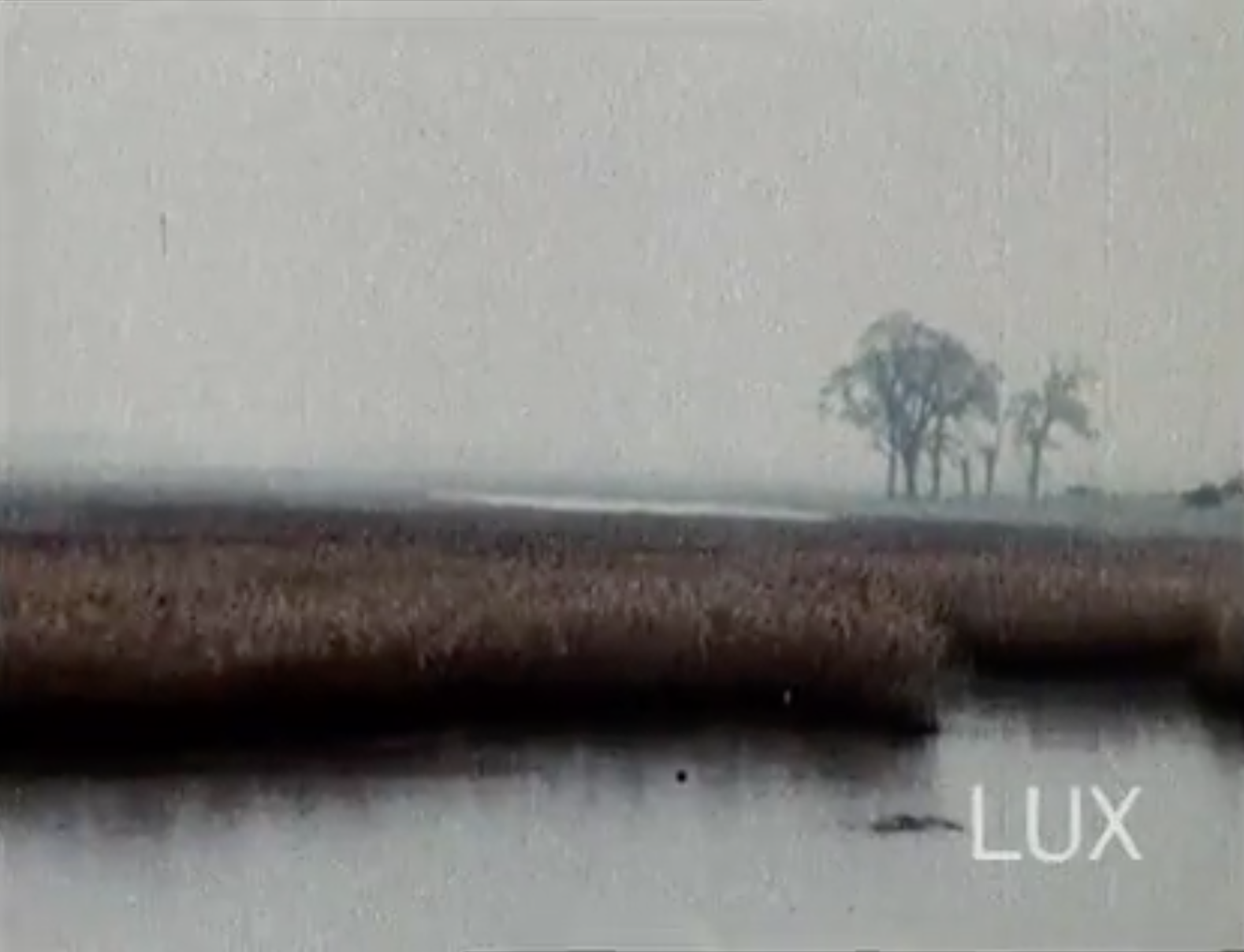
The above images are from View William Raban (1970) a motionless camera captures a riverbank, postproduction manipulation draws our attention to changes. In particular the changing, very British, weather seems to reflect the unpredictability of the being out in the landscape The muffled voices remind us of the film-maker standing next to the camera, this is an unromantic record of an unremarkable view.
The title, View, both draws our attention to the experience of watching the film and makes us think about the pleasure of the countryside. A ‘view’ is normally thought of in terms of a ‘good view’, but this sight is flat, muddy and foggy. Raban has said that he is not interested in the romance of the image but instead what it is to record it – he was engaged with deconstructing images and took an almost scientific approach to his work at this time – and these notions are reflected here.
William Fowler – http://www.screenonline.org.uk/film/id/1329894/index.html
Time changes the landscape, it changes places, although made in 1970 there seems to fresh relevance to this examination of the process of recording images of the landscape. For me Raban is asking us to reflect the the urge to take unremarkable snapshots of the places that we go. With the ubiquity of image making technology we can constantly create records of our path through the landscape, but are these images valuable historical documents or muted facsimiles that interrupt the creation of more romantic memories. In retelling an event that we had from memory we construct a narrative based on the ‘truth’ of our experience of the event, it is subjective, personal, and colourful, a image of the same cannot replicate this completely, does a more objective kino-eye reduce and diminish the experience. In View by manipulating time Raban seems to remind us that this is a image, recorded by a machine, breaking the illusion that it is real, he stops us from becoming immersed.

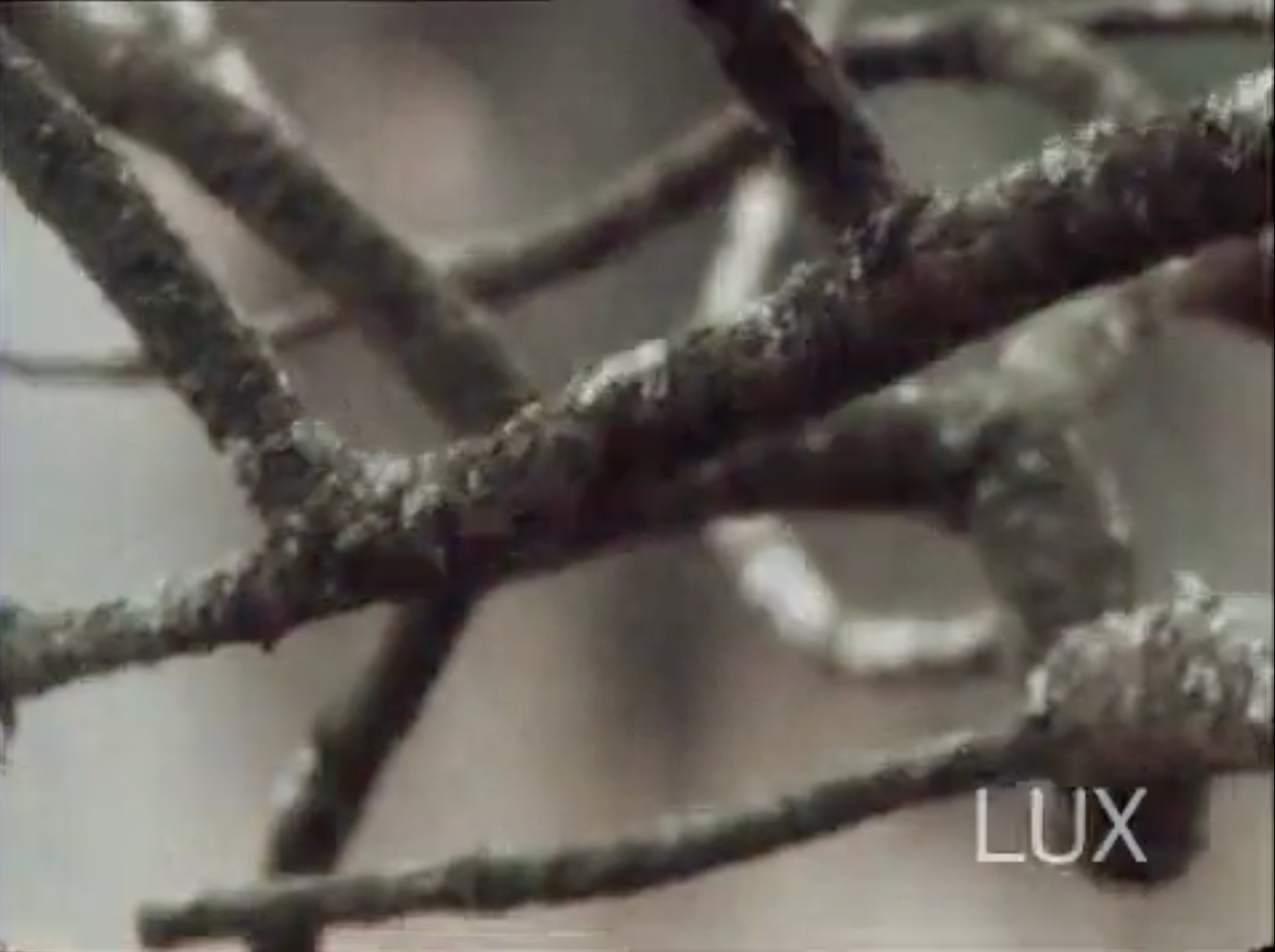
Both a frenetic energy and a remarkable stillness seem to collide in this unusual film, shot on 16mm with a powerful telephoto lens. Artist Jenny Okun adjusts her camera and observes gentle changes in the landscape, at the same time exploring abstraction.
Jenny Okun’s films are notable for their simple yet boldly experimental qualities. In the 1970s she filmed elements of the British landscape and weather and was also interested in musical notation and sound. Today Okun works in several different mediums; not unlike this film, her drawings and sculptures appear to compress time and energy, with jagged lines and edges which simultaneously project and freeze life and movement.
https://player.bfi.org.uk/free/film/watch-the-focus-ii-1978-online
Similar to Raban Okun’s film Focus II (1978) draws attention to the film-making, this time rather that post-maniputation the hand of the artist on the lens is felt in the jarring shifting focus. The otherwise still composition crashes between focus of the mossy detail on a tree branch and an obscured view of a more distant landscape, an otherwise peaceful view is render chaotic and disorienting, as a viewer we are reminded that we are not in control of this experience (unless we choose to stop watching). This lacking of control is something that is normally subtly manipulated in traditional film-making, light, composition, and focus are adjusted by the film-makers to control an audiences gaze and orchestrate a specific immersive experience. Okun seems to be challenging the idea of suspension of disbelief, we are brutally thrown around the film, very aware that we are watching a work of time-based art on a two dimensional screen.
Both of these films are causing me to question the relationship of the artists choices and the control of the viewer when considering an interactive 360 degree video. When using 360 video we give up much of the control mentioned above, the viewer chooses when and where to look, especially when viewed in a VR headset there are no frame edges for reality to leak into the viewing experience, this has the potential to be very immersive.
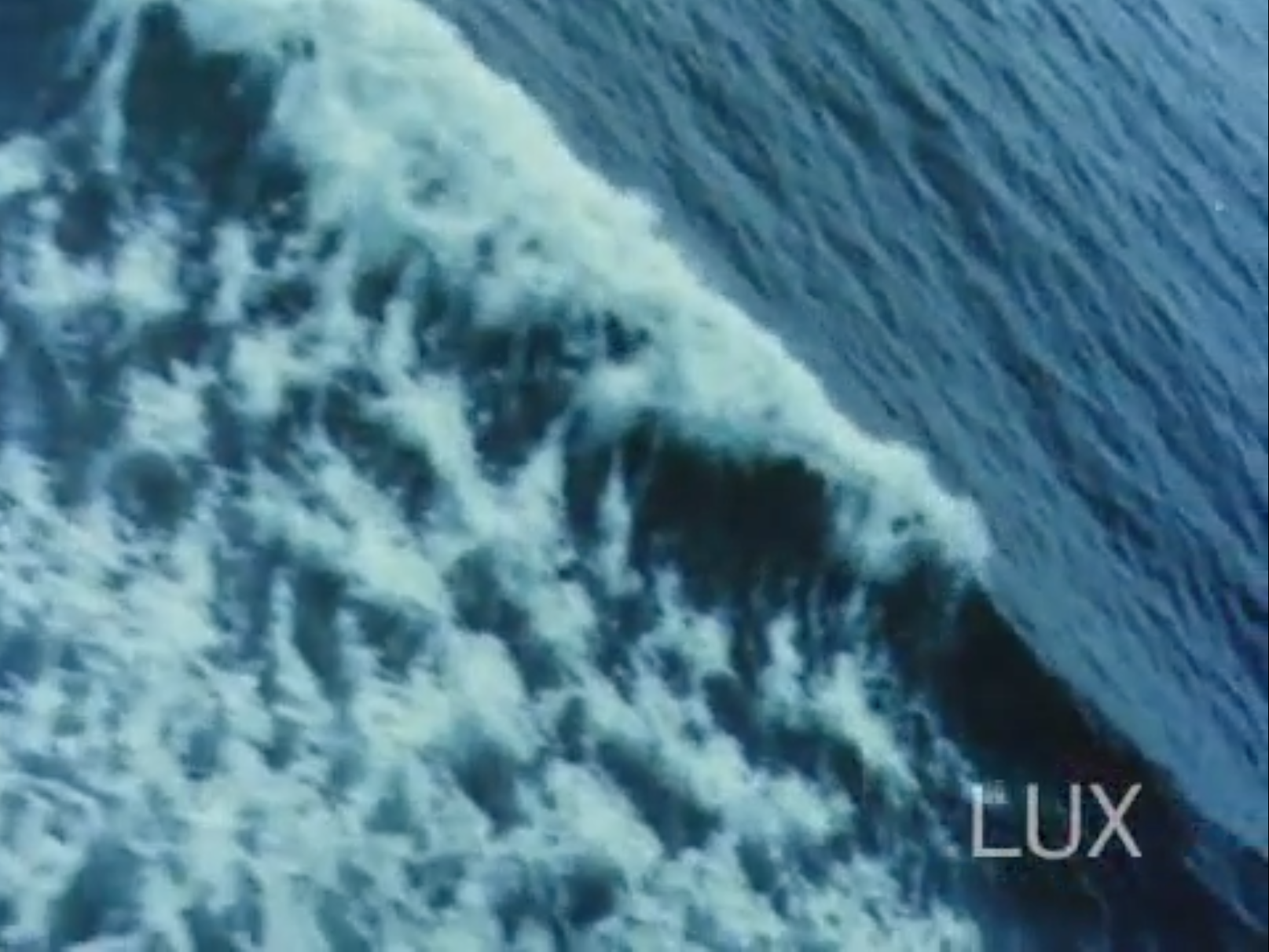
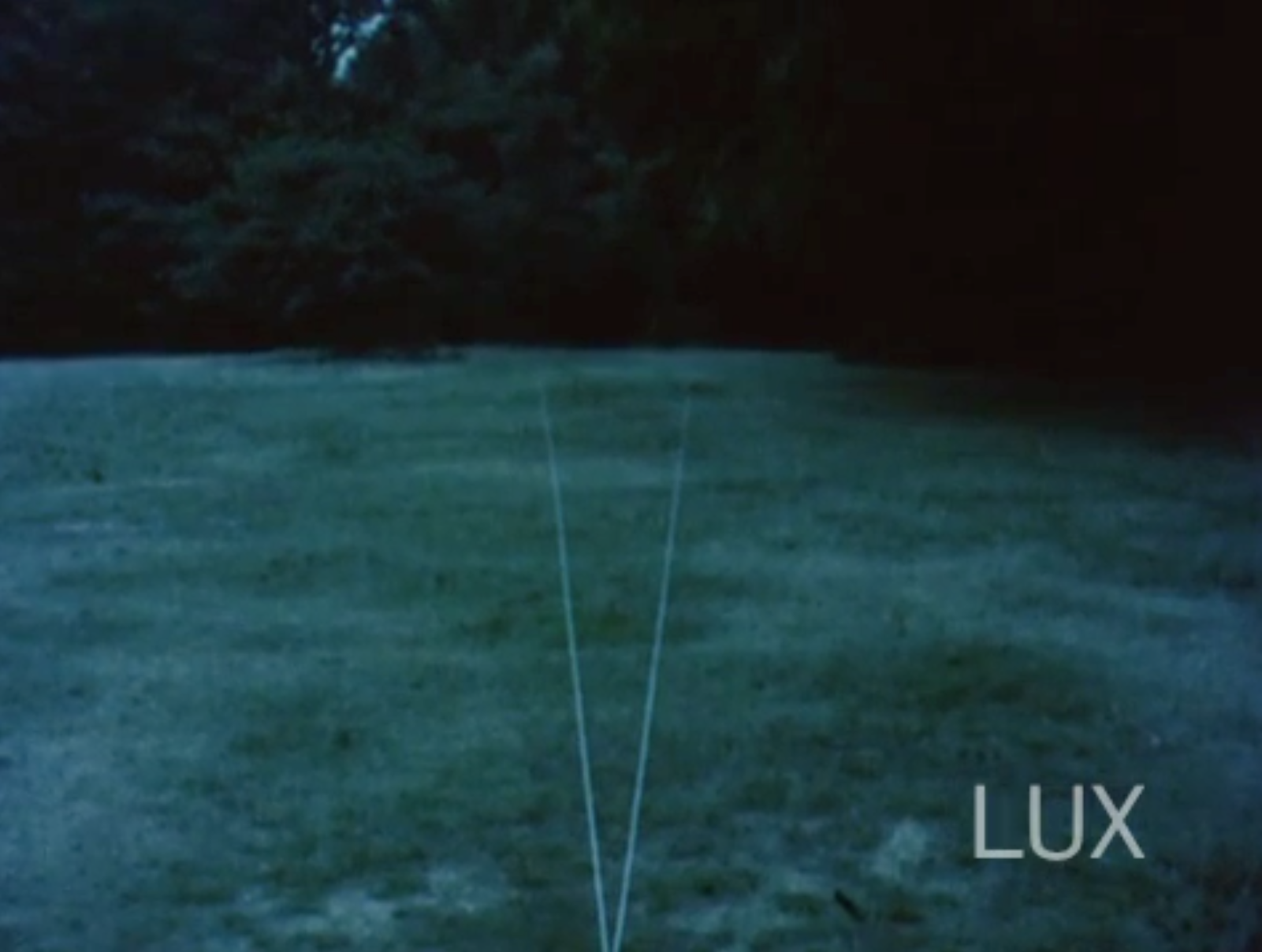
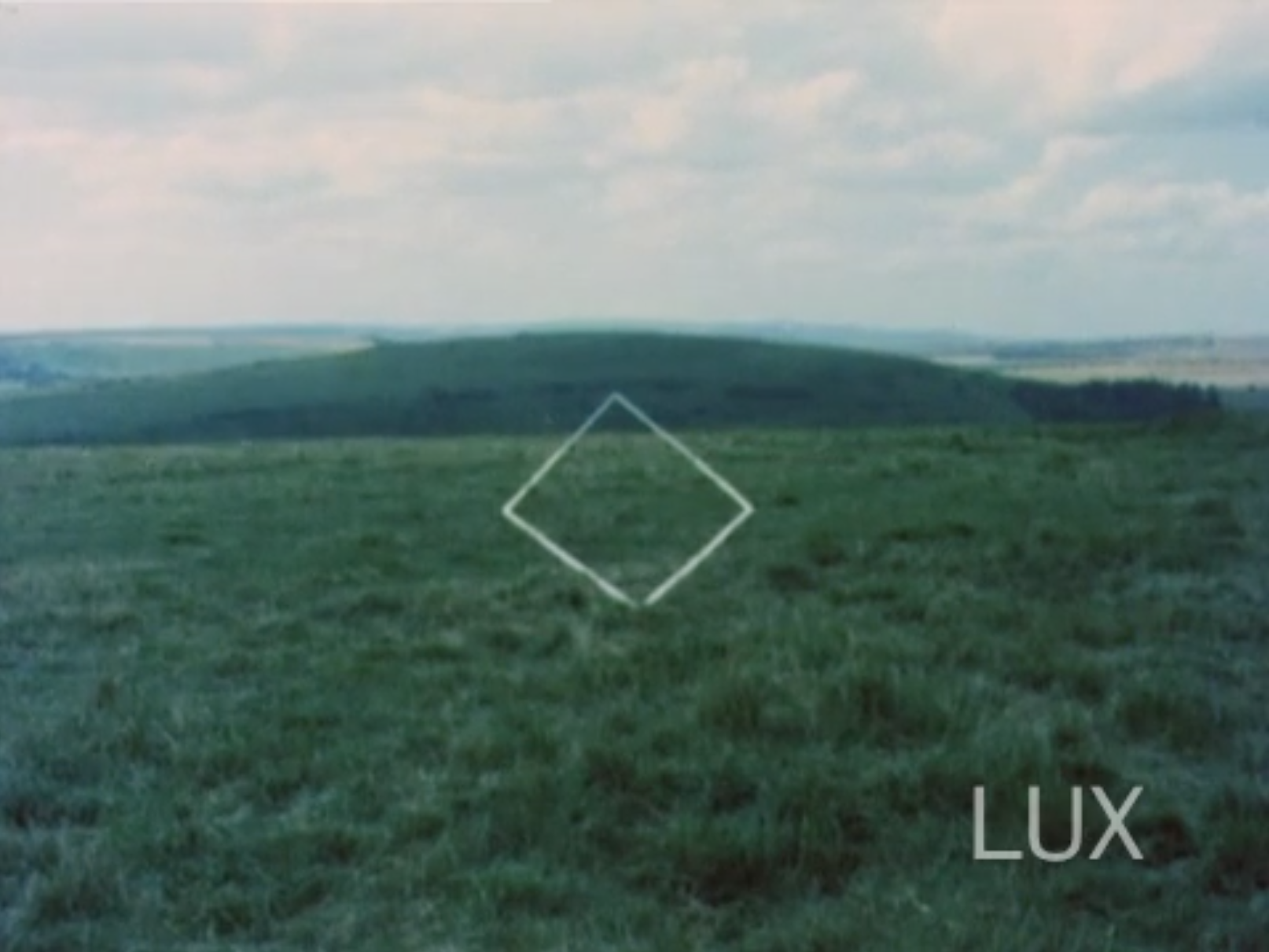
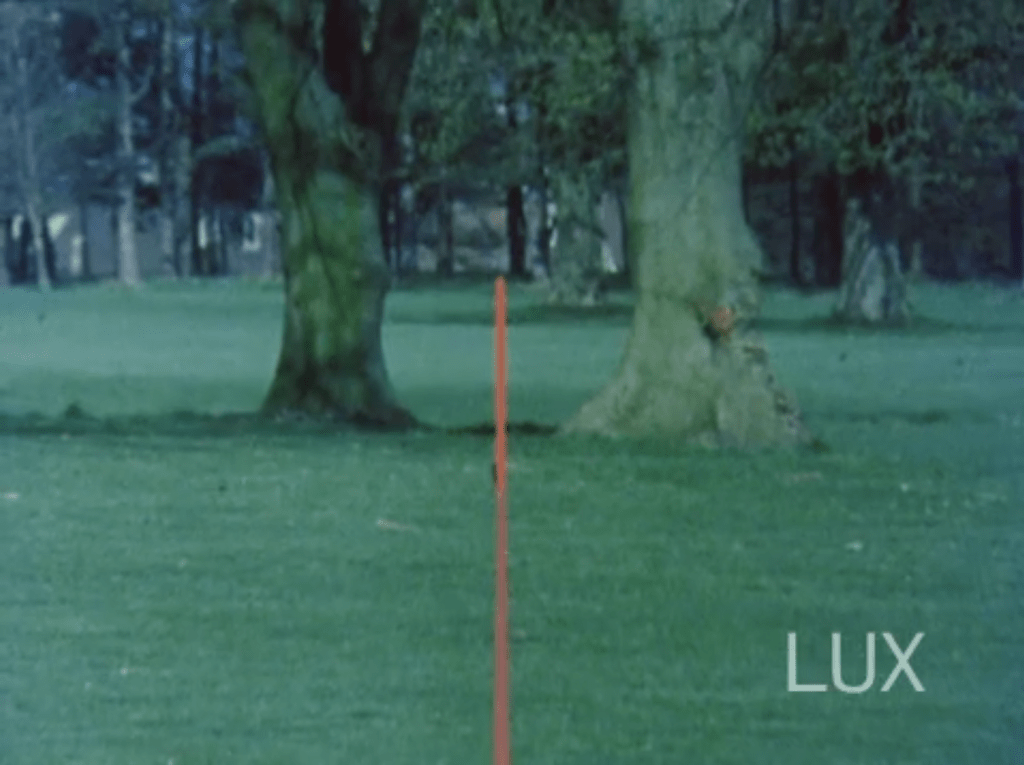
In Vertical (1969) David Hall approaches challenging our understanding of space through the incorporation of perspective questioning scupltures into the landscape. For me Hall’s work is arresting in the way that we are forced to think about, the space of the landscape, the artist recording it, and the fallibility of our way of seeing it.
“.. it would be a mistake to regard this film as documentation of sculpture.. It is important to realise that the sculptures only work because they are recorded on film. Their function in the film is to draw attention to the difference between our actual experience of space and the representation of three dimensions on a two dimensional surface.”
Chris Welsby https://lux.org.uk/work/vertical
I wonder if directional sound might used to draw the viewers attention out of the immersion of the 360 degree experience in a similar way.
 mattprentice