I really liked the Jackson Pollock point about starting out with a vague direction of where he was heading when he started a project and not being afraid of destroying the work in the process.
“Sometimes I lose the painting but I have no fear of changes, of destroying the image, because a painting has a life of its own I try to let it live.”
Jackson Pollock https://www.sfmoma.org/watch/jackson-pollock-paintings-have-a-life-of-their-own/
Working digitally it can be difficult to let go in this way as it is so easy to command-Z and go back to where you were before you did something, there is no permanence to a process. I find that this can leave using digital effects techniques experimentally hollow as it is too easy to try all of the filters, this abundance of choice makes choosing meaningless.
Having already recorded some (supposedly) test footage with the dancer that I had discussed working with I was able to start exploring Isadora
I found the Difference effect emphasised the movements in a really interesting way, somewhere in the network of modules that I applied (I think it is probably the variable Delay) the frame-rate Isadora was able to output dropped to 5fps. The result of this when recording the stage was the time-lapse/fast motion effect of the above test.
I had two more filming sessions planned with the dancer to work on something more specific, we had discussed some ideas around the work of Bob Fosse I was interested in using some of the ideas of isolating movements rather than doing the whole body. Unfortunately illness got in the way, so I have had to work with what I have got.
The other side effect has been that I had to work with Isadora without a dongle, therefore I couldn’t save projects in progress and could only record 5 seconds of the stage at a time. The result is some of the limitations that are normally absent when working digitally.
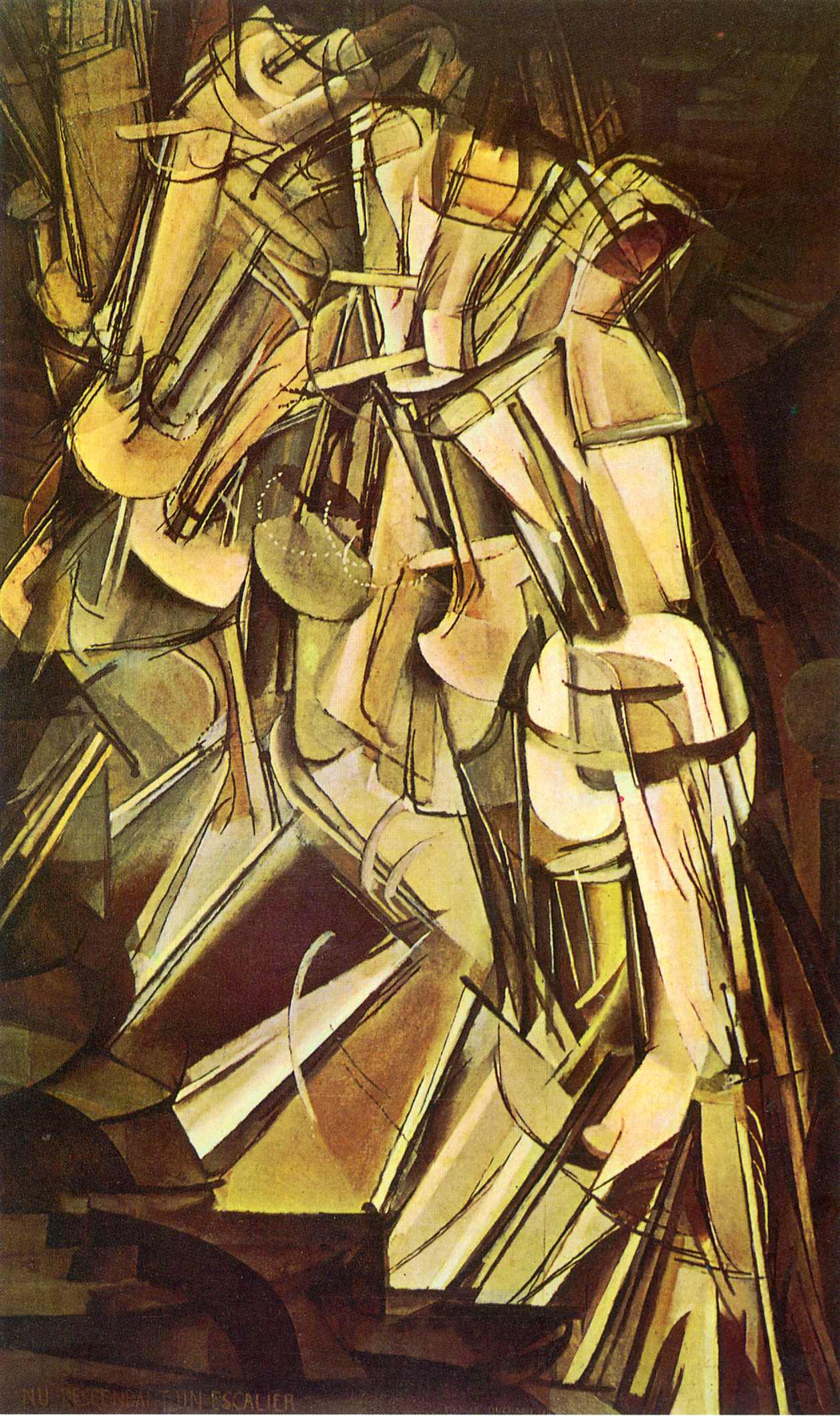
en.wikipedia.org/wiki/Nude_Descending_a_Staircase,_No._2
Philadelphia Museum of Art – Collections Object : Nude Descending a Staircase (No. 2):
www.philamuseum.org
I have long been interested in exploring what a visual representation of phasing from minimalist music might look like so this is the direction that I am setting off in. Duchamp’s Nude Desending a Staircase is an interesting reference point here as well for me it has that same hypnotic, rhythmic, and evolving quality that It’s Gonna Rain has got.
In one of the workshops for DaDa we were shown a delay effect in Studio Artist that gave an interesting visual reminiscent of Duchamp’s painting.
I recorded a short section of the dancer with the difference effect applied from Isadora then took it into Studio Artist.
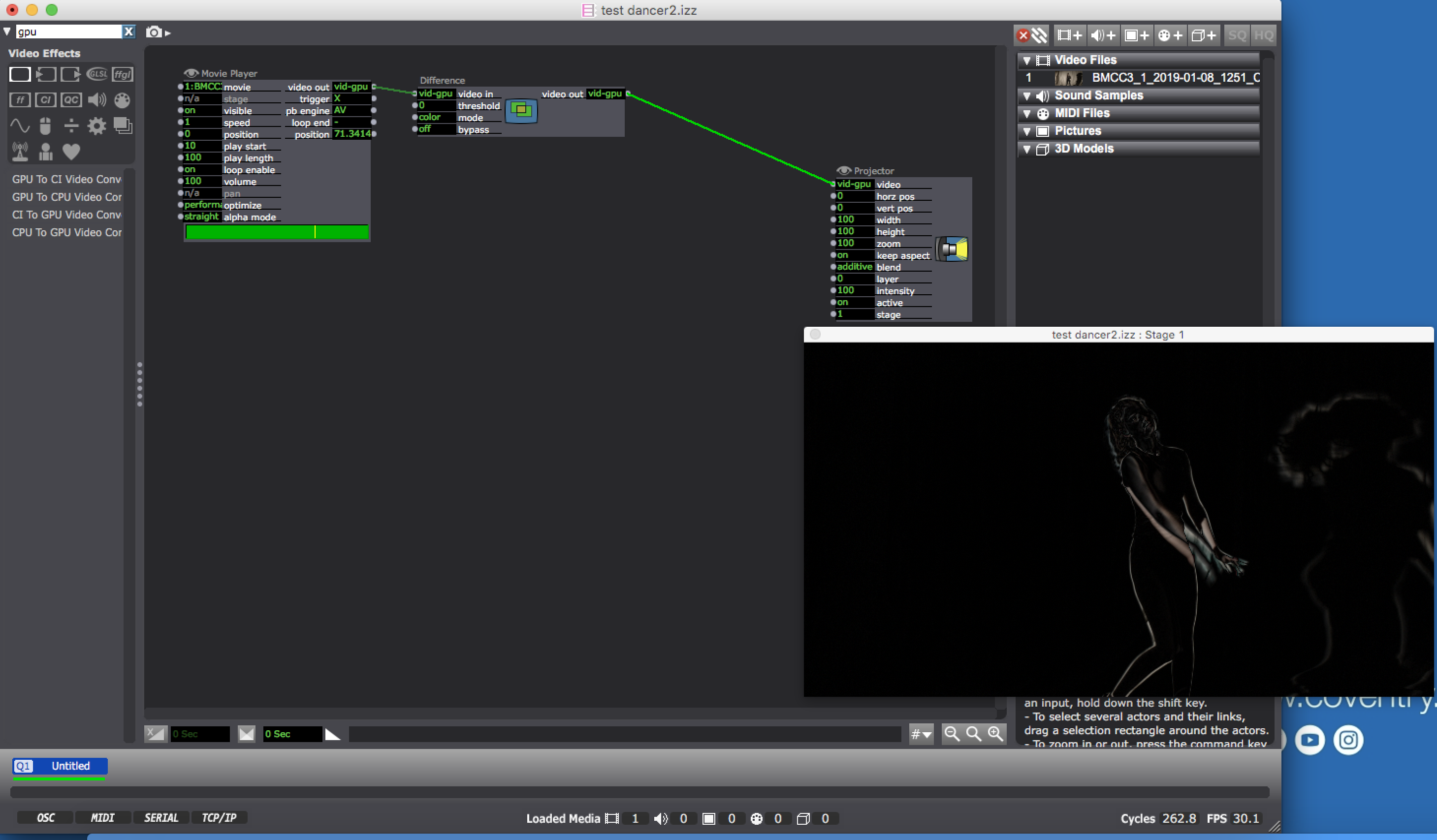
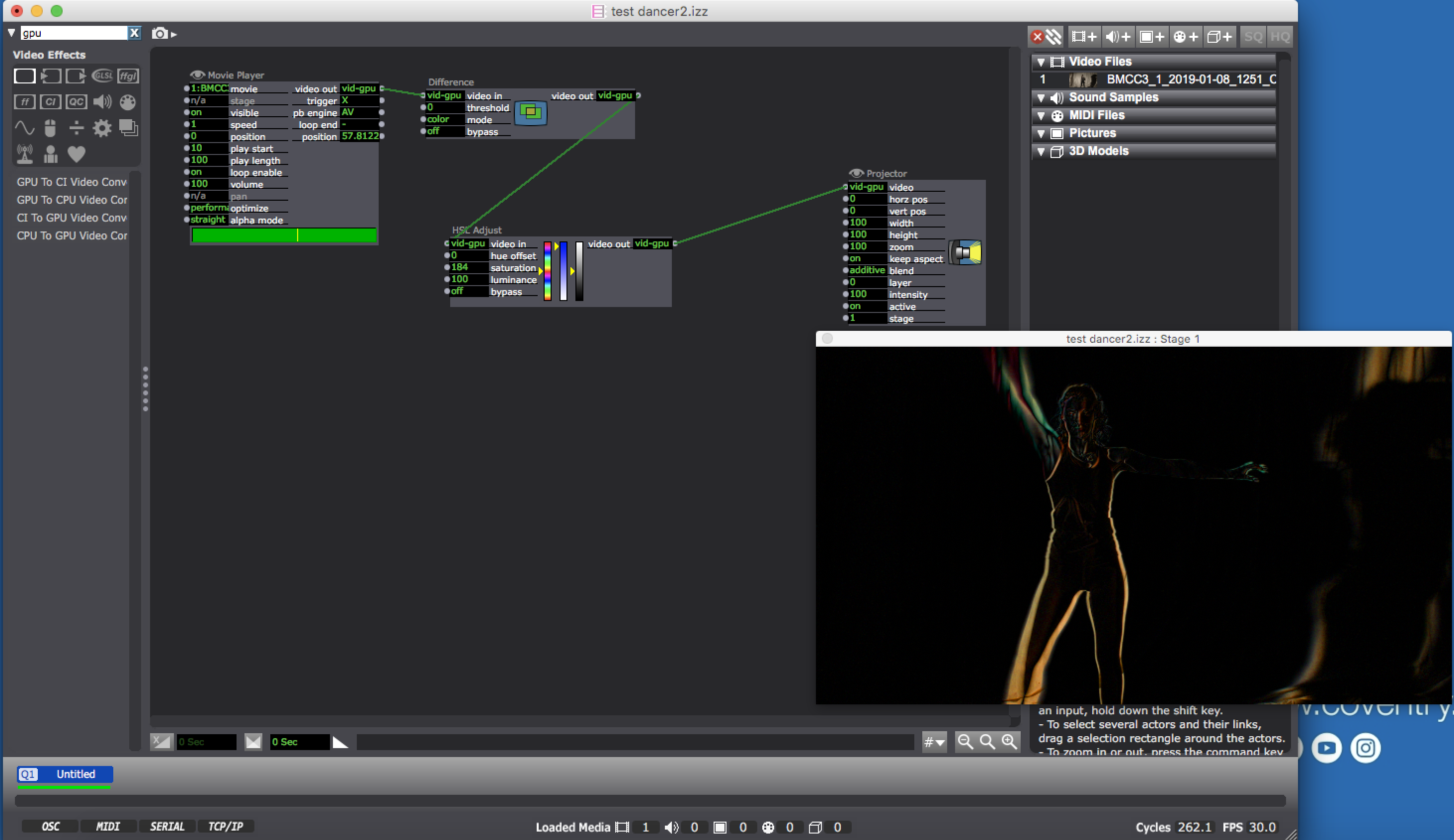
I did several more experiments with the footage with muted tones but wanted to represent the energy of the dance through colour. Going back to Isadora I took the saturation over the top and added the City Lights effect, that produced something that felt light neon lights.
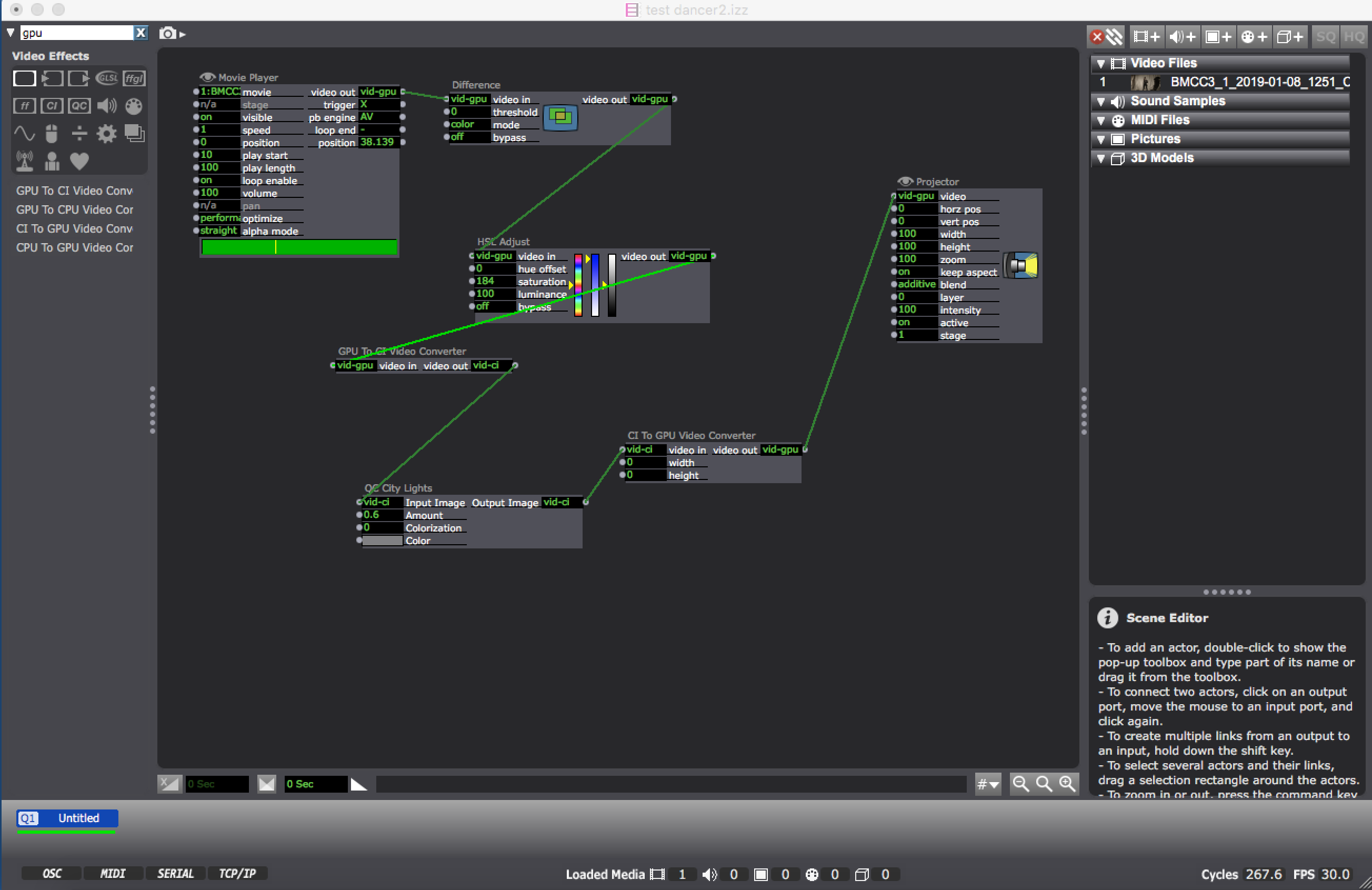
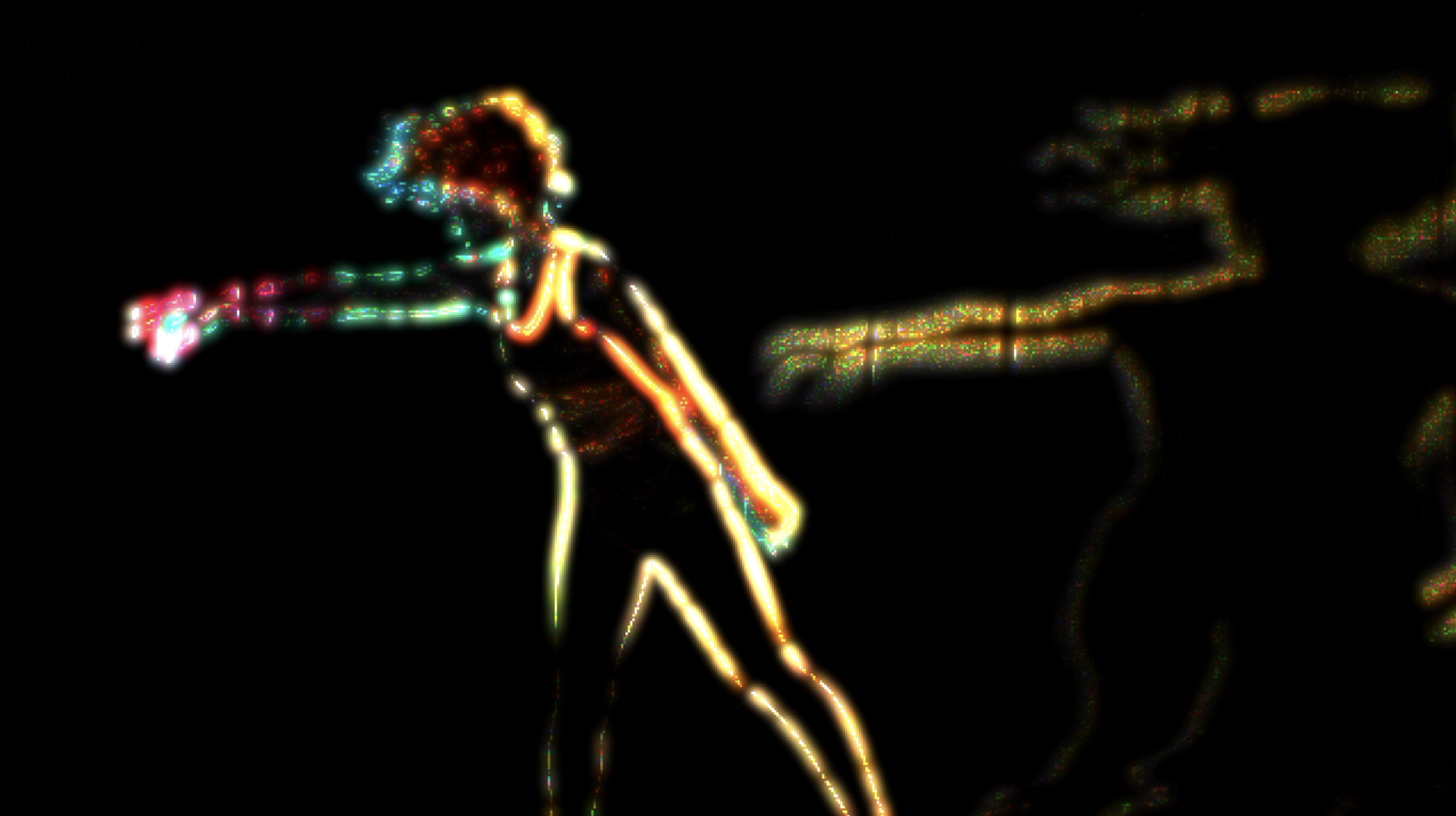
I also recorded a series of short clips and pieced them together to produce a longer section of the dance, I then layered 252 times in After Effects with a series of delays and various lengths of dance loop.

Interesting effect but it lost something in the chaos of the middle. I went back to the idea of phasing.
For the most recent experiment I did some maths on the length of the clips and the time stretching that would be applied to the second layer. By using a ration 8/9 I was able to make sure that the two versions came in and out of phase at multiple points during the 2 minutes. Again this was achieved in After Effects.
 mattprentice