Kino has come at an interesting confluence for me, the anniversary of Bauhaus has lead to a number of retrospective articles and given me the opportunity to reflect on how our thoughts are shaped by experiences.
Unexpected links
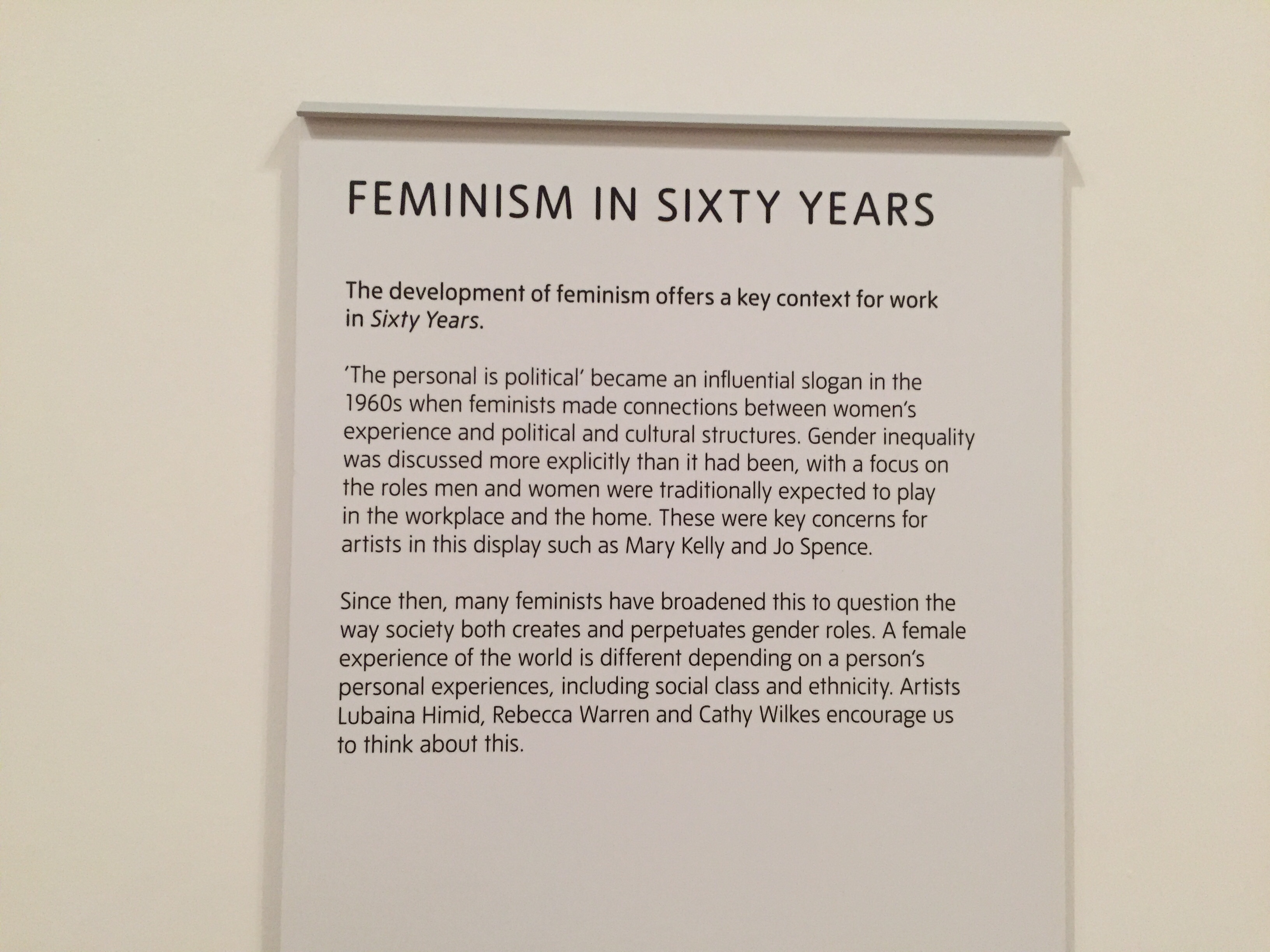
I had a lecturer during my undergraduate degree who was exploring ideas of Feminism through discussion of cleanliness. A single idea struck me profoundly during that lecture, it was the first time I encountered ‘The personal is political’ as a concept. It began an exploration of power, and social norms and values, this has developed for me into a broader rejection of elitism in the arts. I wrote my undergraduate dissertation on the cultural value of mainstream cinema, and the links between consumerism and identity. I came across a phrase in a translation of Michael Foucault, “Nodes on a network”, I have been referring to that idea for so long now that I can’t remember the original source. I can see the mustard yellow of the hardcover book, I can see the desk in the now demolished brutalist Birmingham Central Library.


Forward
The demise and loss of this modernist oasis first to fast food chains and then to wrecking ball for me has a deeper significance. The John Madin designed Central library was a grand vision of a cultural centre integrated into the heart of the city, it even had a bus garage for the basement. Cost implication never realised the original dream and it slowly fell into poor repair and had poorly planned additions stuck on to make better commercial use of the space. In 2016 it came face to face with Birmingham’s Motto – Forwards.
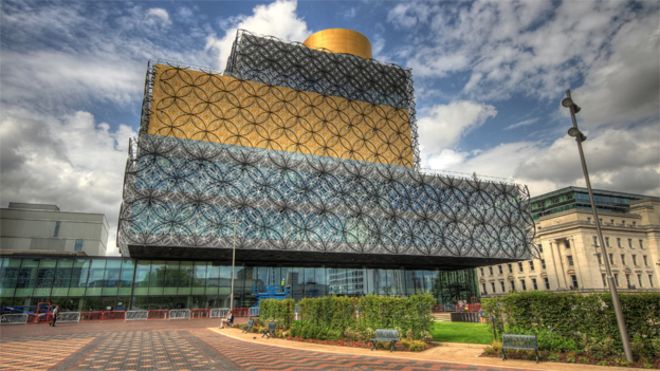
The functions of the library have been replaced by the Library of Birmingham. But where the Central library was an upturned concrete pyramid in the centre of the city the Library of Birmingham sits apologetically off to the side of a square that has slowly lost its footfall as the centre of the city moves over, pulled by new shopping areas. The cladding of the library is reminiscent of Birmingham’s most famous building, the aluminium disk adorned Selfridges building. To me the library is pleading to still be seen as relevant.
Optimimism
When I first discovered the Bauhaus at art school I was drawn to what I saw as an optimistic philosophy. Science, technology, and design can evaluate us, that art is important to society. There are plenty of examples of where the Utopian dream of Modernism didn’t/doesn’t work, the central library is a good example, it was never finished, it was inflexible, it didn’t take into account changing use cases. But in the clean lines, lack of wasteful detail, and simple forms I see a very human honesty; this is the thing that I have made. To me there is hope in a lot of modern art; that new ideas, new technology will improve the world.
Spacerace

December 24 2018 was the 50th anniversary of the Earthrise image captured from Apollo 8. Much has been written about how this image has inspired the environmental movement, but for me it is more important as a record of human optimism; there was an idea to go to the moon, plans were made, we went. That is a hugely over simplified and naive statement but I believe that it gets at the optimism that was necessary to dream that it was possible.
Fear of Technology
Whatever the causes this optimism in technological progress has in places been replaced by fear. I think that there is a lot of evidence (blame?) for the this in Science Fiction films. The Scientist always goes too far, they create a monster, it kills us all.


The future of our species is in question like never before, which has made farsighted optimism an unusual challenge.
https://www.theverge.com/2017/11/6/16604190/star-trek-discovery-science-fiction-stories-afraid-of-the-future
A predictable rejoinder, of course, is that in recent decades that same entity also has been implicated in a spectacular series of disasters: Hiroshima, the nuclear arms race, the American war in Vietnam, Chernobyl, Bhopal, the Exxon oil spill, acid rain, global warming, ozone depletion. Each of these was closely tied to the use or the misuse, the unforeseen consequences or the malfunctions, of relatively new and powerful sciencebased technologies. Even if we fully credit the technical achievements of modernity, their seemingly destructive social and ecological consequences (or side effects) have been sufficiently conspicuous to account for much of today’s “technological pessimism.
http://faculty.georgetown.edu/irvinem/theory/Marx-TheIdeaOfTechnologyAndPostmodernPessimism1.pdf
The high profile failures of technology have driven the narrative of fear which dominates the socially positive benefits such as hygiene and medicine.

Postmodern Pessimism
under the regime of largescale business enterprise the ostensible values of sciencebased technology (matter offact rationality, efficiency, productivity, precision, conceptual parsimony) were being sacrificed to those of the minority owners: profitability, the display of conspicuous consumption, leisureclass status, and the building of private fortunes.
http://faculty.georgetown.edu/irvinem/theory/Marx-TheIdeaOfTechnologyAndPostmodernPessimism1.pdf
Unchecked capitalism has shifted the narrative, the rise of populism in contemporary politics seems to suggest that the fear of technology is part of a general erosion of the concept of empirical truth. The ideas of the scientific process, repeated measurement, observation, logic that developed out of the Age of Reason are challenged by post-modern ideas of plurality. It seems that the very ideas that have been developed over the 20th Century that challenged centralised power have now been co-opted by the institutions of power.
The politics of power are so complex that it is difficult to begin to unpick the relationships in a blog post but for me the revivalism associated with post-modernism, looking backwards rather than forwards is inherently pessimistic. That is not to say that technological progress is always beneficial, or should be free from oversight, but is there still space for big dreams.
Diversifying Utopia
I need to make one final point before closing out this rambling post that relates directly back to my own practice and values.
I think importantly it is the experiences that seem small but come to dominate, exposure to the ideas of Feminism, Richard Dyer, and Stuart Hall (a very short list), I became acutely aware of the privileged position that I was fortunate to occupy in society, and also the lack of diversity in the Bauhaus, and amongst modernist thinkers in general. It forced me to question how inclusive these visions of the future were
In developing my response to Kino I want to address make specific acknowledgment of the privileged position of my point of view. By turning the camera back on my eyes, a literal male gaze obscuring the other ideas that I was address.
 mattprentice
2 comments