My audio for Kino underwent a circular process and ended up right back with my initial idea of using a mathematical sequence to derive a midi sequence which would in turn ‘play’ a software instrument.
Music detour
In between this I had a detour via the work of Laurie Anderson, having discussed my ideas and tests with a number of people I found that the ideas I was exploring were rather opaque (I eventually decided that this was ok). At this point I had a chance encounter with Laurie Anderson’s O Superman again.
The combination of spoken word and synthesised vocals sent me off down a path to produced a generated voiceover. I used a series of rules, based on sampling random sentences from my notebook, to develop a script for a voiceover that I then gave to the voice generator in Adobe Audition.
Once I had heard the first test I felt that I would be moving too far in the direction of having a narrative to the piece so I dropped the experiment at this point.
Return of Recamán’s Synth
At this point I was preparing for the main filming of the project so I spent some time away from the audio, whilst researching as much footage from NASA planetary probes as possible I started to consider the ideas I discussed regarding who made these discoveries, I realised that I would not be able to fit this into the already overloaded visuals of the project and realised this was pushing me back towards an algorithmic soundscape.
I came across Recamán’s sequence several years ago and became fascinated by the way it was both rigidly structured and unpredictable. There is a really useful feature at The Encyclopaedia of Integer Sequences where you can export a Creative Commons licensed midi file for any of the sequences of numbers. Recamán’s sequence can be found here.
Recamán’s sequence (or Recaman’s sequence): a(0) = 0; for n > 0, a(n) = a(n-1) – n if positive and not already in the sequence, otherwise a(n) = a(n-1) + n.
0, 1, 3, 6, 2, 7, 13, 20, 12, 21, 11, 22, 10, 23, 9, 24, 8, 25, 43, 62, 42, 63, 41, 18, 42, 17, 43, 16, 44, 15, 45, 14, 46, 79, 113, 78, 114, 77, 39, 78, 38, 79, 37, 80, 36, 81, 35, 82, 34, 83, 33, 84, 32, 85, 31, 86, 30, 87, 29, 88, 28, 89, 27, 90, 26, 91, 157, 224, 156, 225, 155…
https://oeis.org/A005132
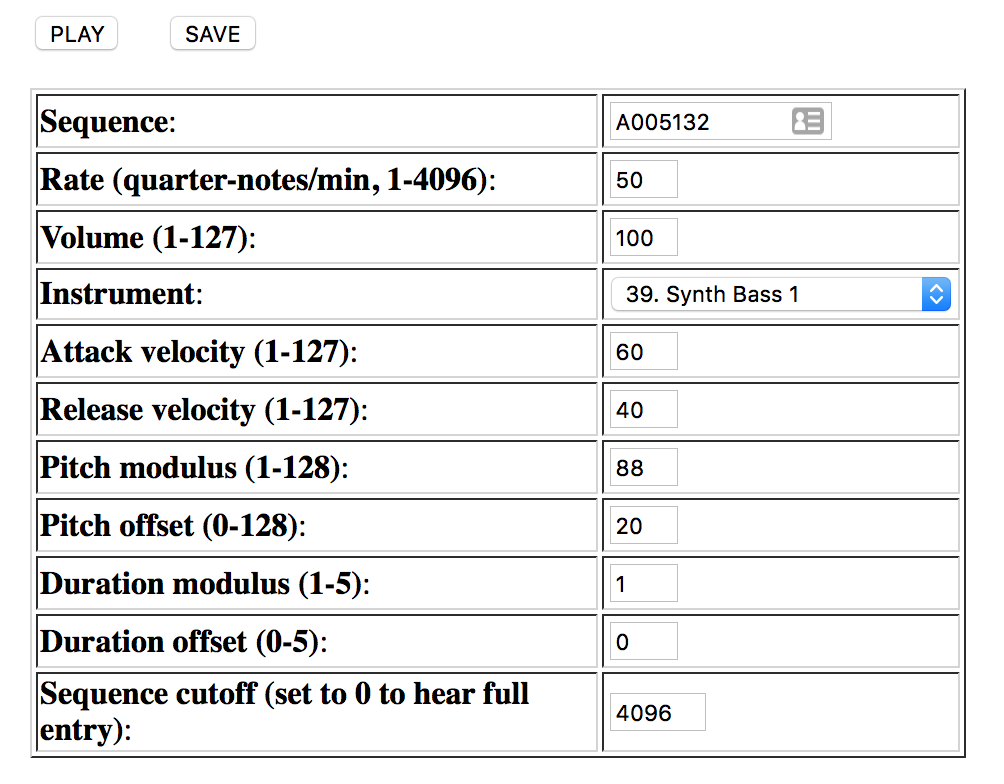
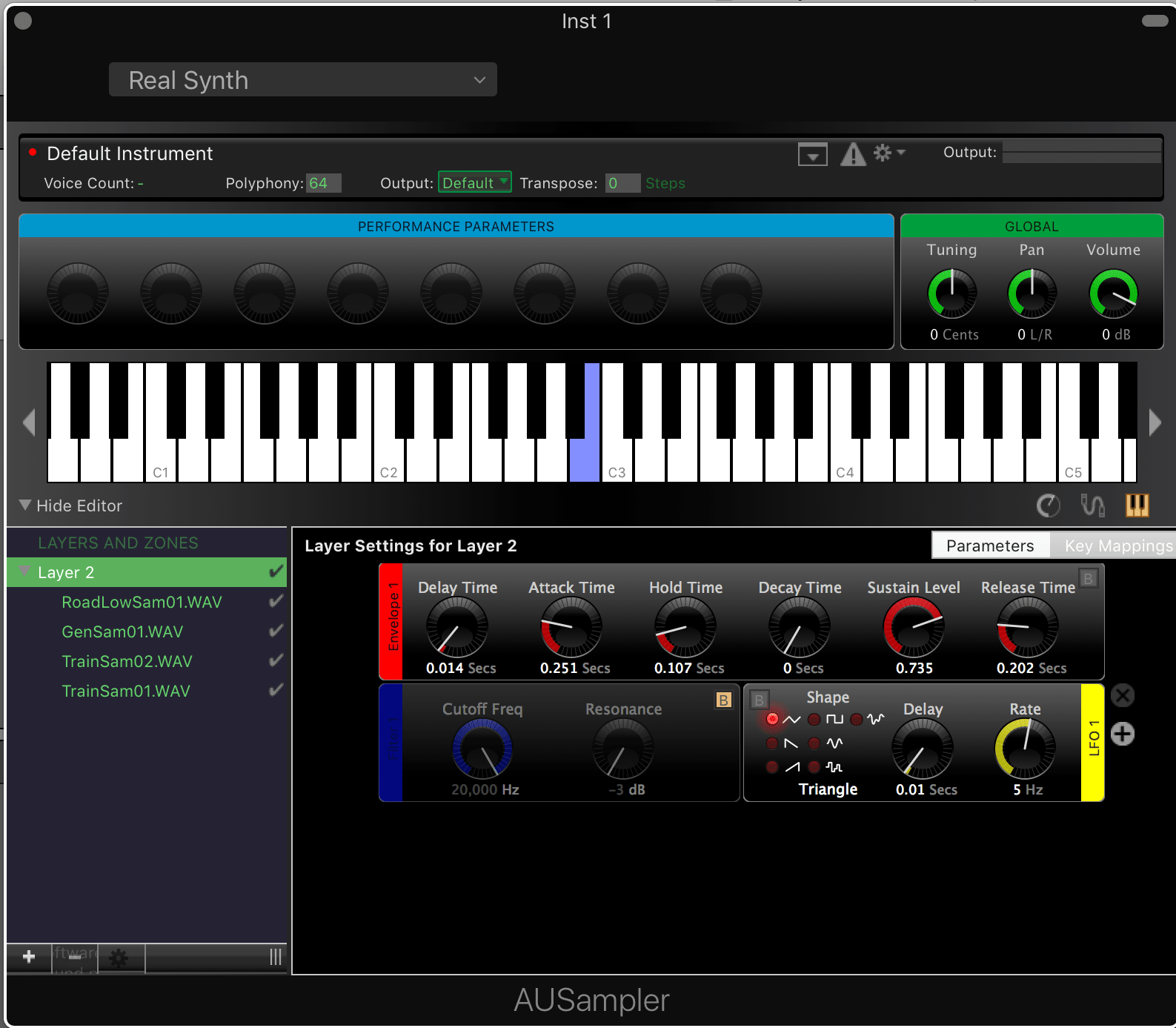
Once I had the midi file I went back to a project that I had been working on to create a software synthesiser using the Musique Concrete technique. In Garageband I created a software instrument using the AU Sampler plugin.

I specifically used samples that had a range of pitches as well as different audio textures.
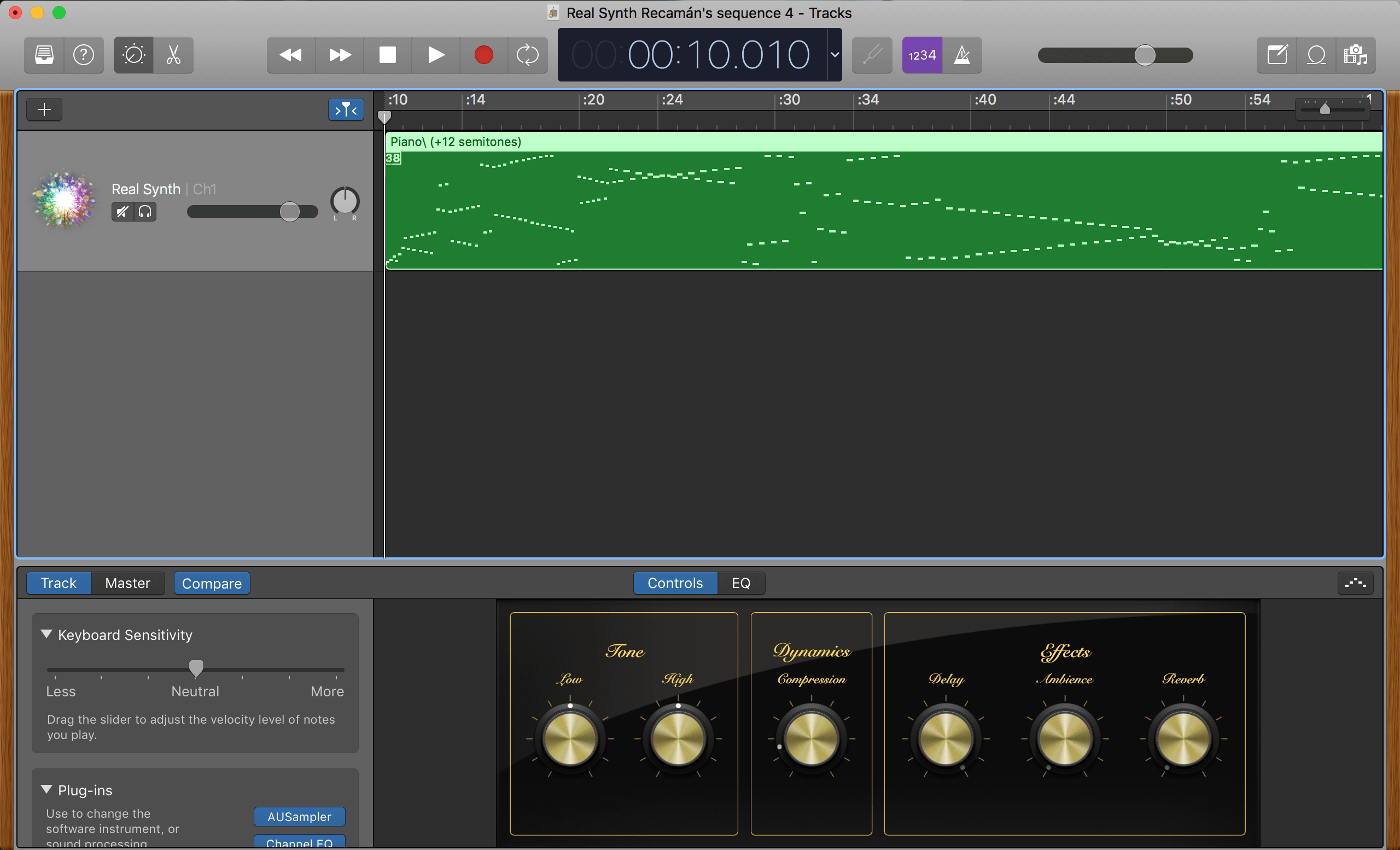
I am hoping that the structures of soundtrack will reflect the structures of the visuals.
 mattprentice
2 comments