In researching Fernand Léger as part of the DADA project I was reacquainted with Ballet Mecanique from 1924. There is an interesting parallel between the pure experimental exploration of movement that I think is demonstrated in this film and use approach of using Studio Artist to explore the body in motion in the DADA project.
For us the joy of dancing saws in а sawmill is more familiar and easier to understand than the joy of human dancing.
D. Vertov, ‘Му. Variant manifesta’, Кino-Fot, по. 1, 25-31 August 1922,
рр.11-12.
With the ubiquity of screens in 21st Century society it is easy to forget that the ability to capture and recreate an illusion of movement has been both a technological and artistic voyage. Being able repeat, slow-down, speed-up the motion of the natural world, and even generate movement where there is none has given rise to scientific, cultural and political transformations.
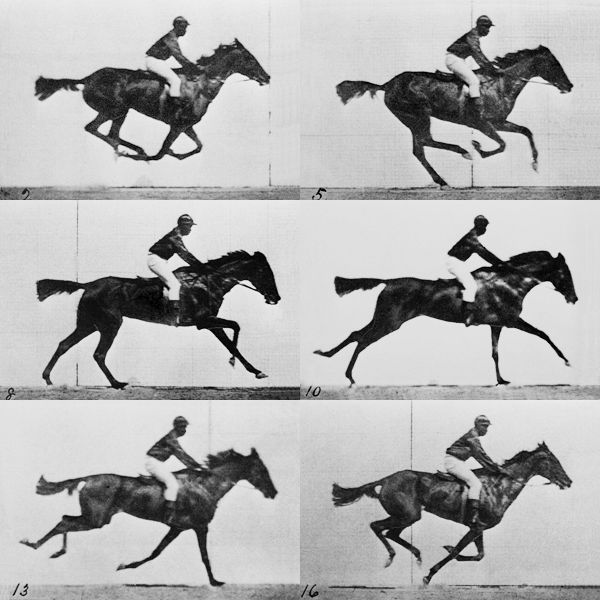
The impact of technology can only be measured after it has been created, often the consequences are unexpected. Discussions of the truth in still and moving images are as vital today as ever when video evidence is increasingly being used to record and repeat, and provide previous impossible views of the world.
When jurors are shown slowed-down footage of an event, the researchers said, they are more likely to think the person on screen has acted deliberately. While a slow-motion replay may allow jurors to see what is taking place more clearly, it also creates “a false impression that the actor had more time to premeditate” than when the events are viewed in real time.
Khaleeli, H. 2016. How slow-motion video footage misleads juries.
A short film that simply asks us to question the truth the movement that it claims to represent could be even more important today than in 1924.
 mattprentice